
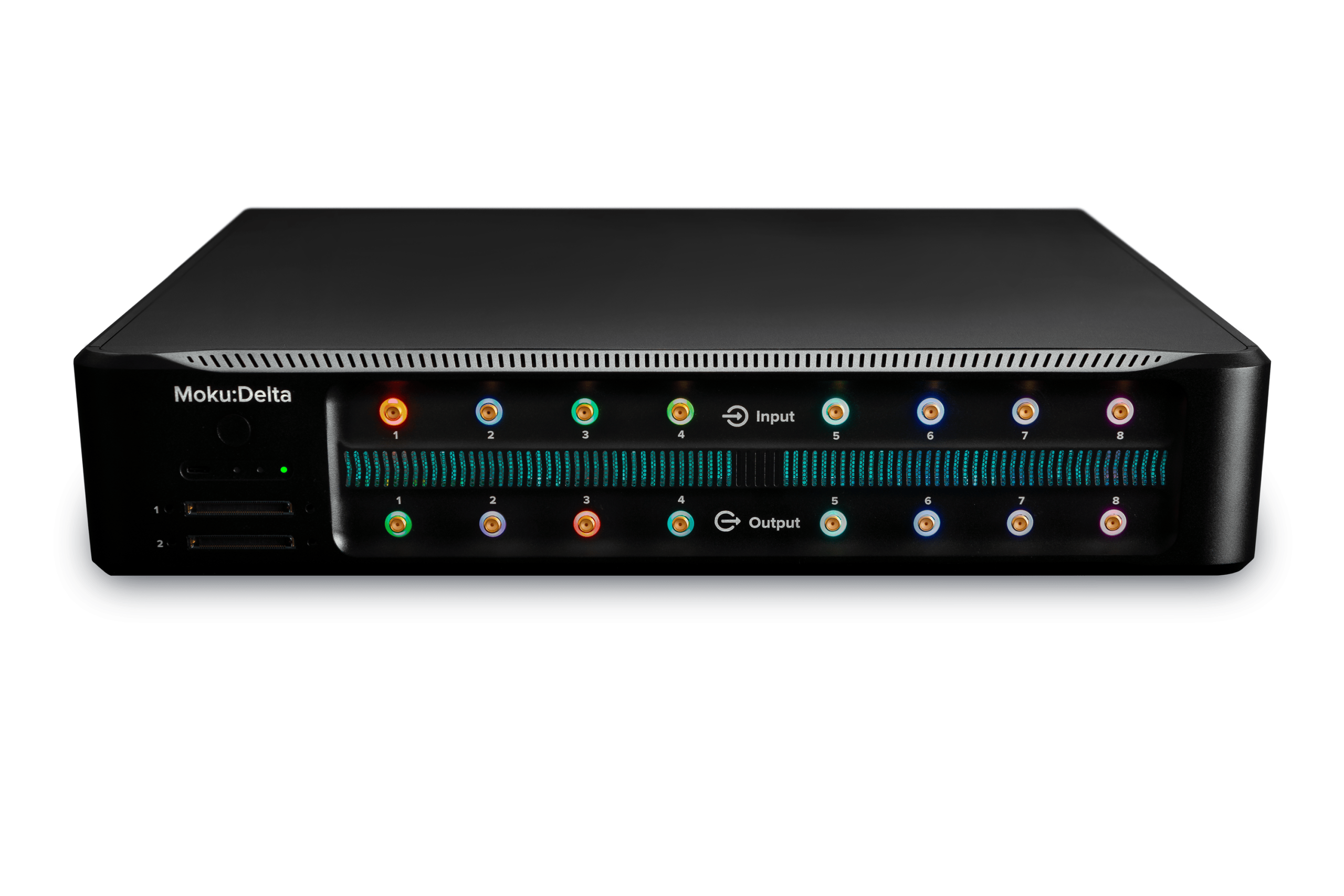
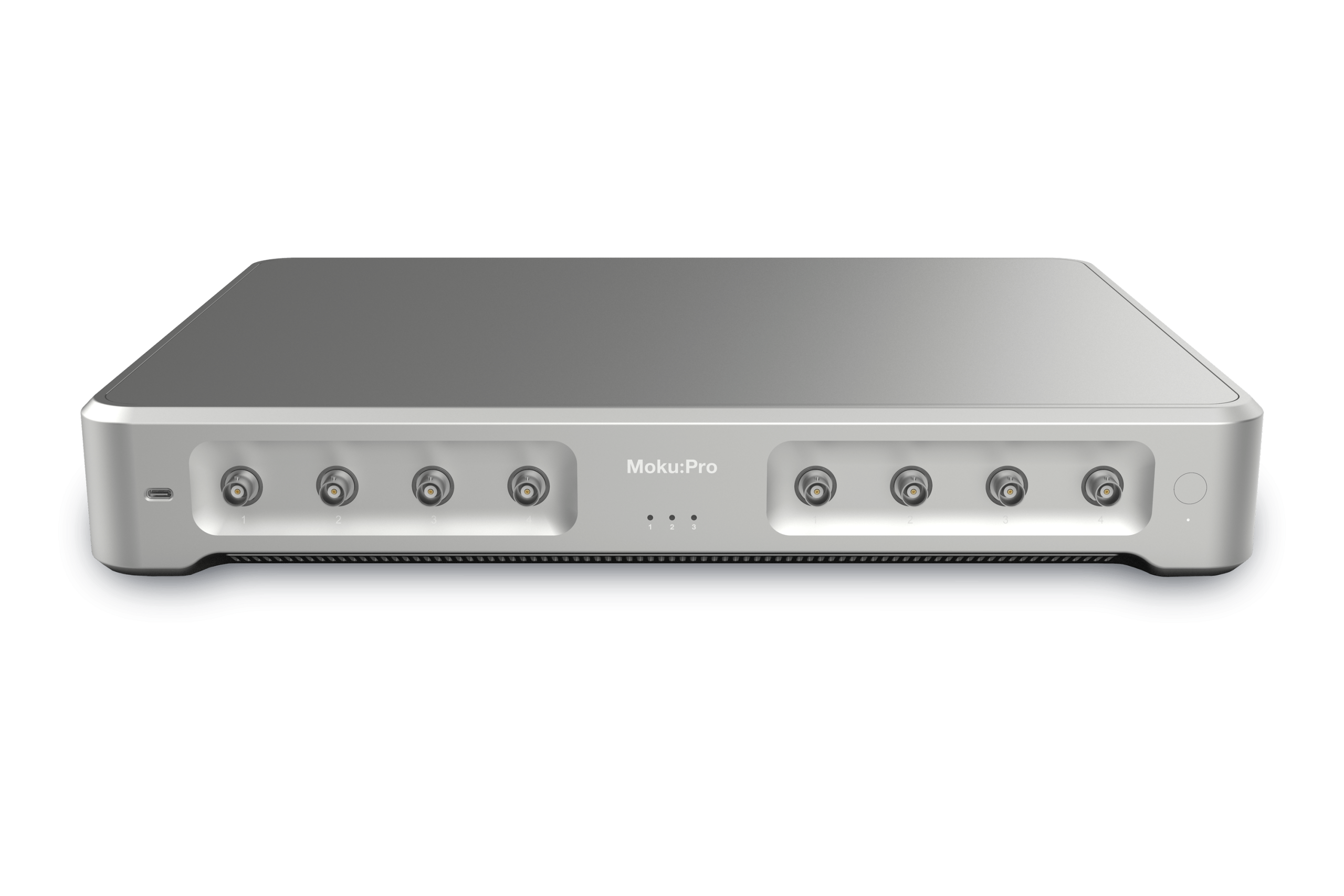
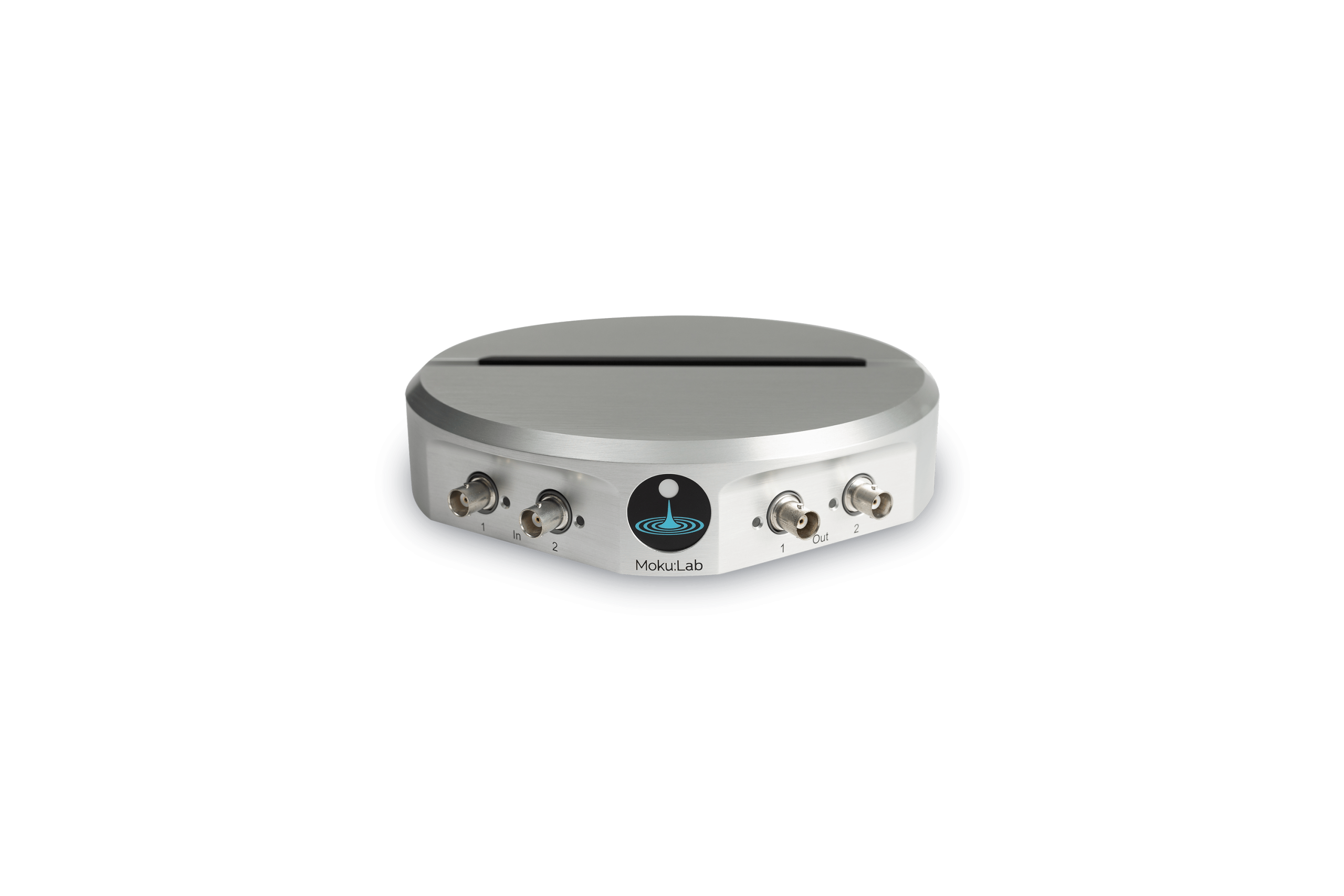
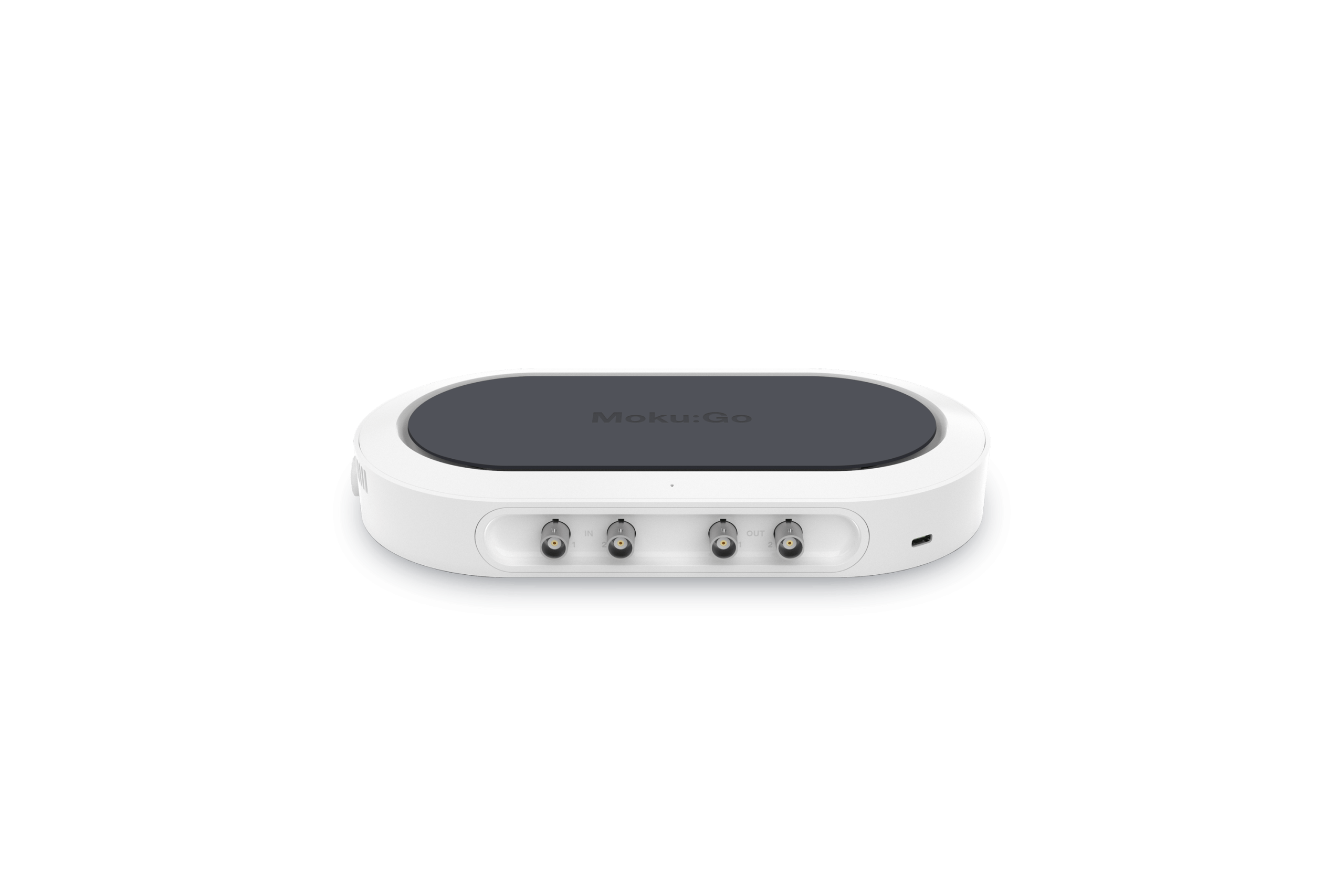

Moku:Delta
Accelerate product design and validation with 2 GHz bandwidth, eight analog inputs and eight analog outputs, 32‑channel high‑speed digital I/O, and < 10 nV/√Hz input noise.
On-demand webinar
Controlling complex test equipment setups
for silicon device test and characterization.
Register for immediate access.
Key benefits of Moku:Delta
High-bandwidth signal generation and analysis
Create and capture high-speed analog signals with 2 GHz bandwidth and 5 GSa/s sampling rate.
Measure low-SNR signals with precision
Achieve ultra-low noise performance at < 10 nV/√Hz input noise.
Reduce test time by an order of magnitude
Perform measurements in parallel with eight independent input and output channels.
Control and monitor complex digital systems
Capture and drive digital signals on 32 DIO channels for integrated system test.
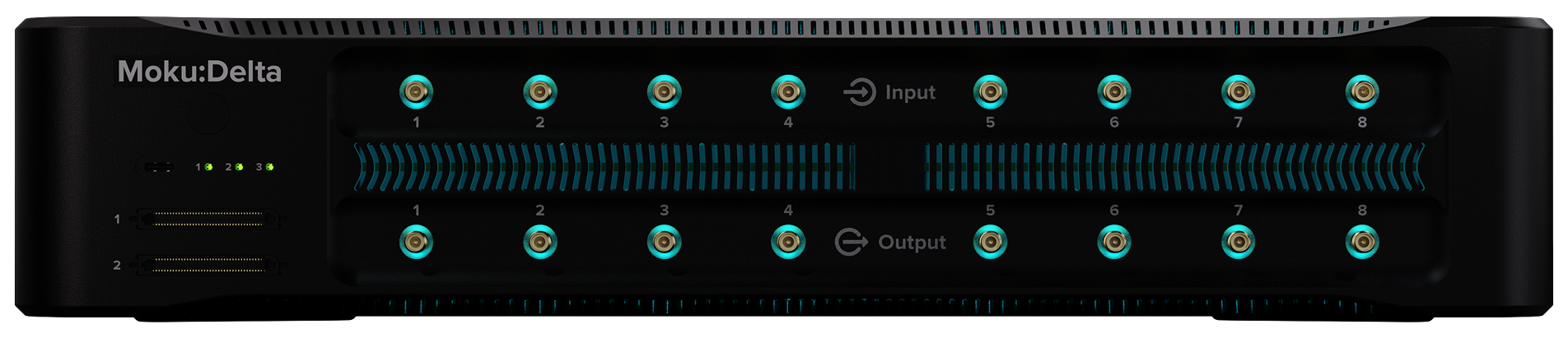
Key specs & capabilities


Multiple instruments in a single platform
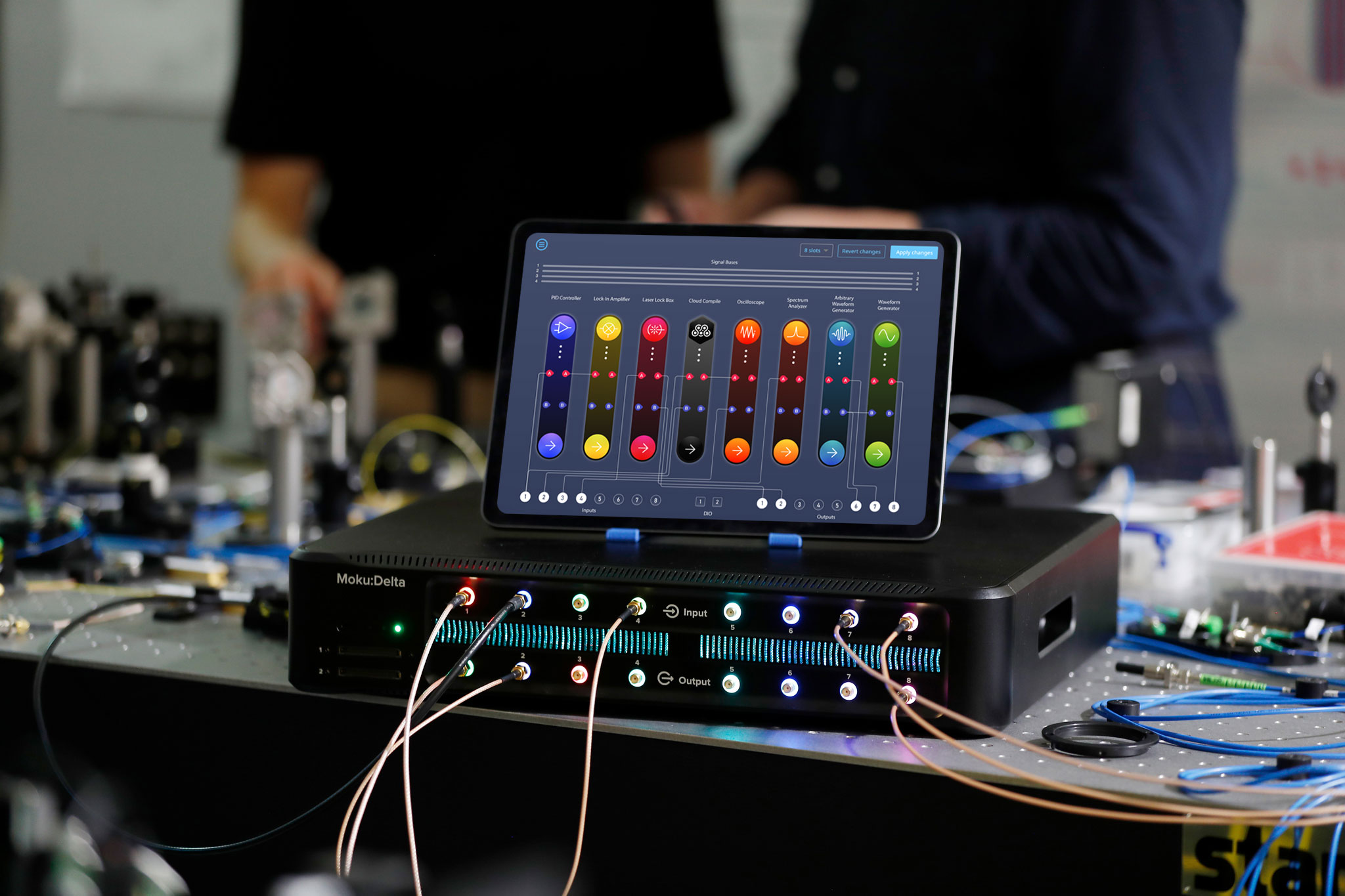
With support for 15 different instruments and the ability to deploy up to eight instruments simultaneously, Moku:Delta offers over 2 billion possible test configurations in a single 2U device. Partial reconfiguration of the RFSoC FPGA delivers the flexibility of software with the performance of hardware.






















Create a customized test system on a single piece of hardware
With partial FPGA reconfiguration, Multi-Instrument Mode helps you build custom test configurations with low-latency, lossless interconnects to reduce complex cabling and impairments.
Daisy-chain instruments together to build sophisticated digital signal processing pipelines and hot-swap instruments in and out without interrupting those running in tandem.
Parallel DUT validation on a single device
Perform signal generation and analysis with synchronized instruments to fully characterize integrated circuits (ICs). With Multi-Instrument Mode, run up to 8 instruments on one Moku:Delta device simultaneously, allowing you to program and synchronize Oscilloscopes, Spectrum Analyzers, Arbitrary Waveform Generators, Data Loggers, and more.
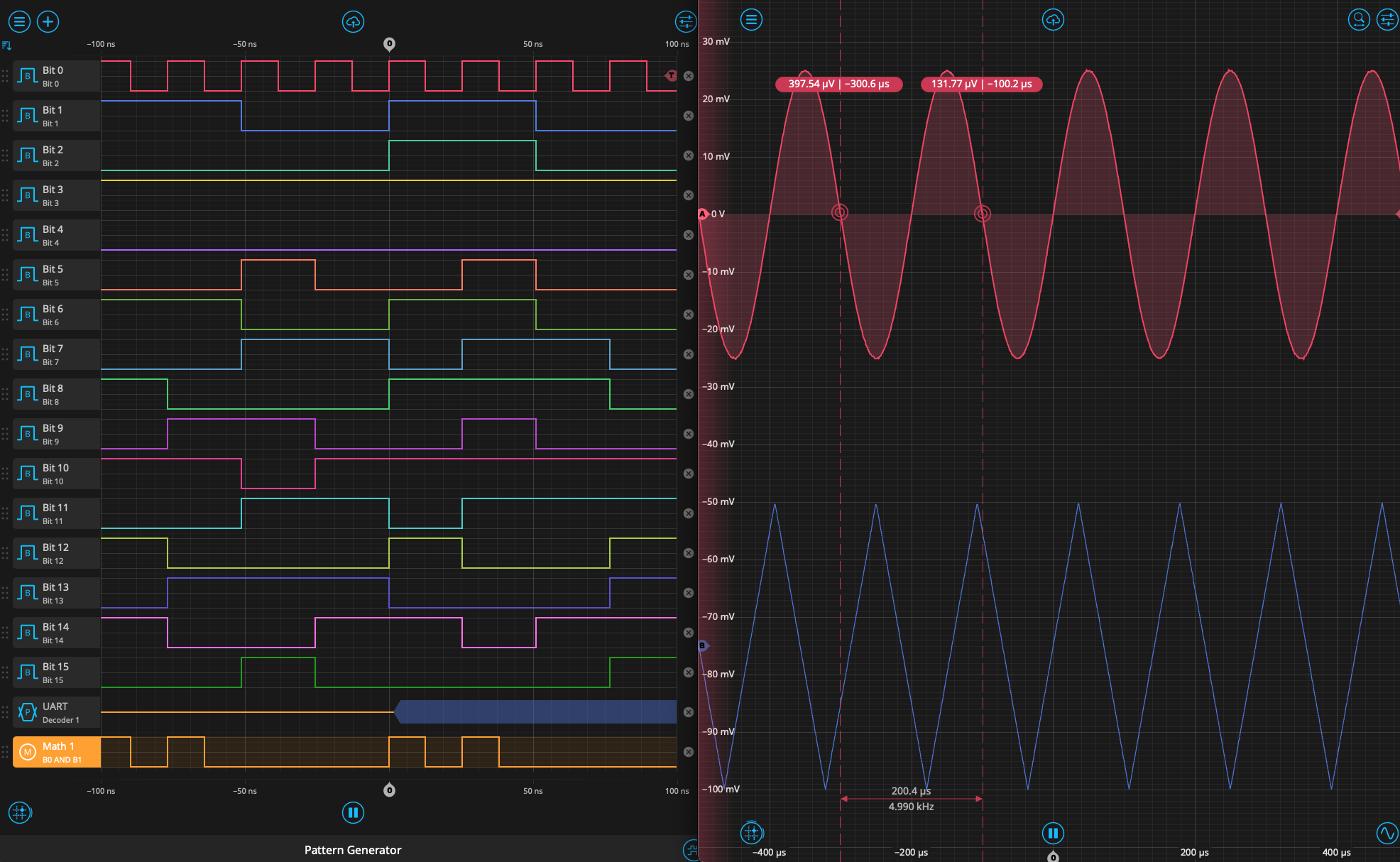
Analog, digital, or mixed-signal operation
Whether characterizing op-amps, data converters, front ends, or other common ICs, it’s important to test across domains for end-to-end device characterization. Deploy the Oscilloscope, Logic Analyzer, and Data Logger in Multi-Instrument Mode for full analysis and capture of mixed-signal tests.
Combine with Moku Cloud Compile for ultimate customization
The ability to deploy custom code alongside Moku software-defined instruments provides you with not just the full suite of Moku instrumentation, but infinite instruments. Use industry-standard VHDL or Verilog to deploy bitstreams directly to Moku and have your custom feature running in minutes.

Get started with Moku:Delta
Contact us to learn more.