


Precision instruments. One configurable platform.
Hardware-enabled, software-accelerated. Moku devices combine compact, high-performance hardware with an intuitive software interface, delivering 15+ instruments in one easy-to-use solution.

How to get started
Moku devices harness the processing power and reconfigurability of an FPGA so you can deploy the instruments you need in an instant. Our integration of hardware and software delivers exceptional versatility across a wide range of applications.


Four flexible hardware options
Select the Moku device that best fits your application. With every device, you’ll get the performance and flexibility you need to accelerate your testing. Regardless of the device you choose, you’ll enjoy intuitive software and a consistent user experience.
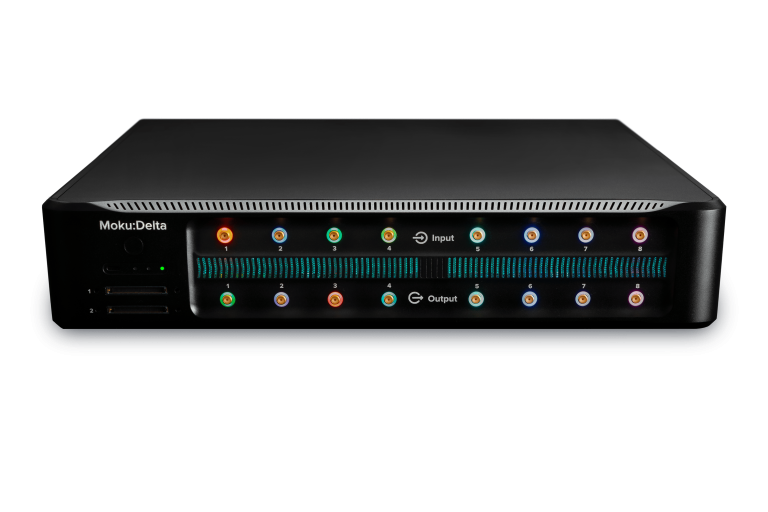
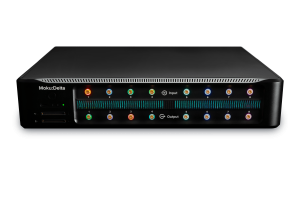
Moku:DeltaAccelerate product design and validation through mixed-signal analysis, 2 GHz instantaneous bandwidth, and an ultra-low-noise, high-resolution front end. |
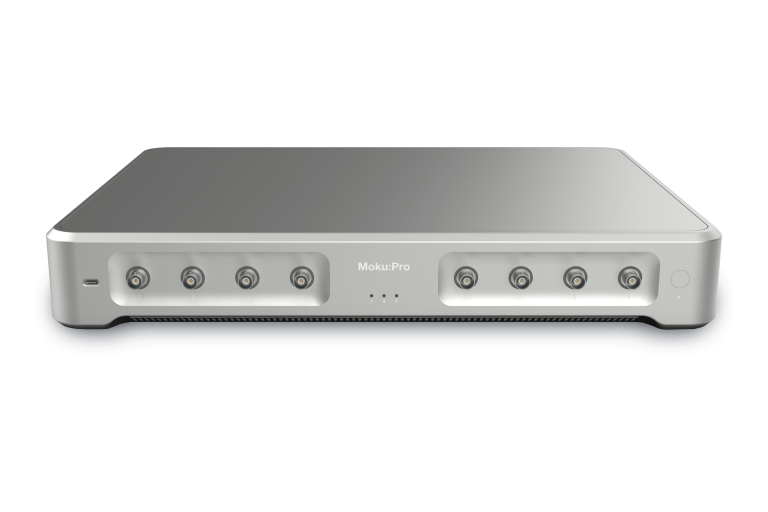
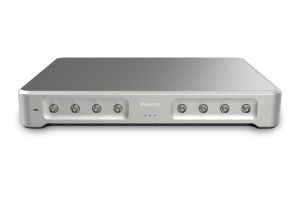
Moku:ProMeet demanding R&D requirements with four simultaneous instruments, each supporting bandwidths to 600 MHz. |
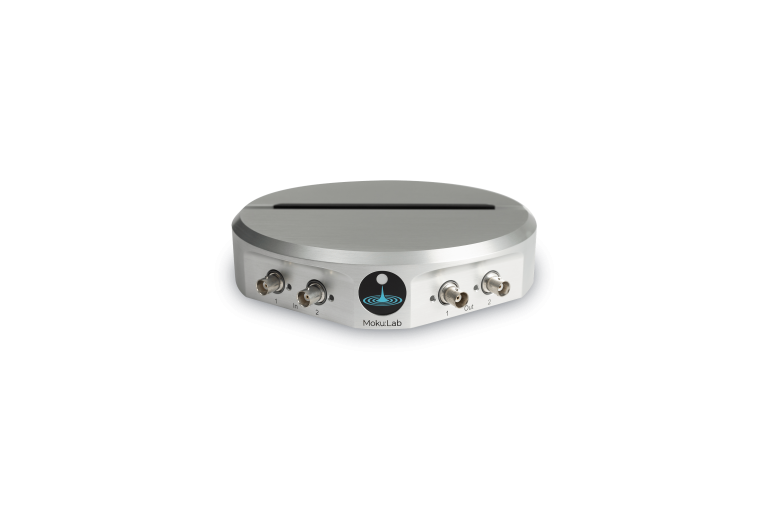
Moku:Lab
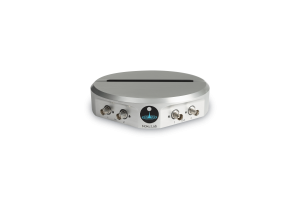
Enable flexible testing with 200 MHz bandwidth, low-latency control, and affordable multi-instrument integration. |
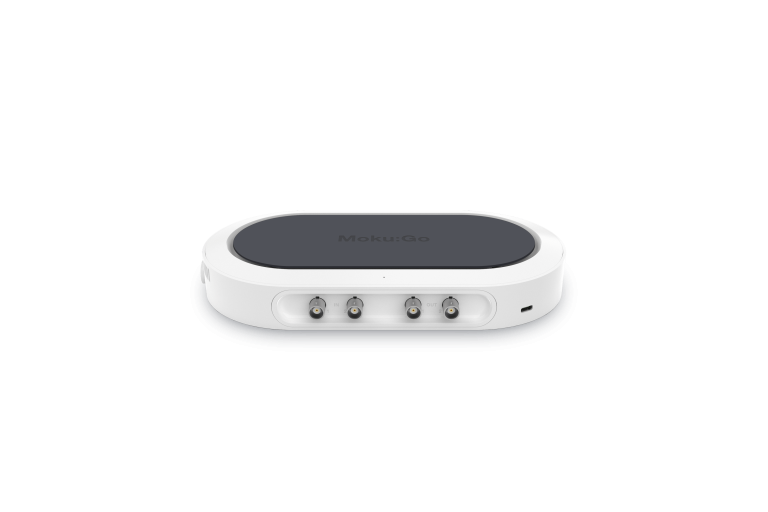
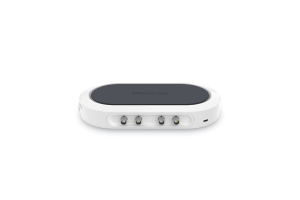
Moku:GoTackle everyday lab tasks with this versatile, easy-to-use solution for quick experiments and testing with 30 MHz bandwidth. | |||||||||||||||||||||
|---|---|---|---|---|---|---|---|---|---|---|---|---|---|---|---|---|---|---|---|---|---|---|---|---|
Moku:DeltaAccelerate product design and validation through mixed-signal analysis, 2 GHz instantaneous bandwidth, and an ultra-low-noise, high-resolution front end. |
Moku:ProMeet demanding R&D requirements with four simultaneous instruments, each supporting bandwidths to 600 MHz. |
Moku:Lab
Enable flexible testing with 200 MHz bandwidth, low-latency control, and affordable multi-instrument integration. |
Moku:GoTackle everyday lab tasks with this versatile, easy-to-use solution for quick experiments and testing with 30 MHz bandwidth. | |||||||||||||||||||||
| Analog inputs | ||||||||||||||||||||||||
| Input channels | Eight 14-bit+20-bit, 5 GSa/s | Four 10-bit+18-bit, up to 5 GSa/s | Two 12-bit, 500 MSa/s | Two 12-bit, 125 MSa/s | ||||||||||||||||||||
| Analog bandwidth | 2 GHz | 600 MHz | 200 MHz | 30 MHz | ||||||||||||||||||||
| Impedance | AC or DC coupling with 50 Ω or 1 MΩ input impedance | AC or DC coupling with 50 Ω or 1 MΩ input impedance | AC or DC coupling with 50 Ω or 1 MΩ input impedance | AC or DC coupling with 1 MΩ input impedance | ||||||||||||||||||||
| Input range | Up to ±20 V | Up to ±20 V | Up to ±5 V | Up to ±25 V | ||||||||||||||||||||
| Analog outputs | ||||||||||||||||||||||||
| Output channels | 8 | 4 | 2 | 2 | ||||||||||||||||||||
| Analog bandwidth | 2 GHz | 500 MHz | 300 MHz | 20 MHz | ||||||||||||||||||||
| Output range | ± 500 mV up to 2 GHz into 50 Ω ± 5 V up to 100 MHz into 50 Ω | ± 5 V into 50 Ω | ± 1 V into 50 Ω | ± 5 V maximum output range | ||||||||||||||||||||
Unsure which Moku device is right for you?
Contact us to speak with an engineer.
A suite of powerful instruments
With Moku, you get a full suite of powerful scientific instruments and advanced customization capabilities. We add new instruments and features regularly, so your device gets even more powerful over time.

Time & Frequency Analyzer
Use the Moku Time & Frequency Analyzer to count, timestamp, and analyze events on multiple channels, all with low RMS jitter. Replace your frequency counter, event counter, photon counter, and more with one versatile instrument.

Spectrum Analyzer
The only Spectrum Analyzer that spans from 2 GHz all the way down to true DC. Observe input signals in the frequency domain with an ultra-low noise floor and a resolution bandwidth as low as 618.5 mHz.

Phasemeter
The Moku Phasemeter is optimized to provide metrology-grade phase measurements. Measure phase, frequency, and amplitude with sub-µradian precision using a digital phase-locked loop architecture with exceptional dynamic range and zero dead time.

Oscilloscope
The highest-resolution 2 GHz Oscilloscope. Use up to eight channels at 5 GSa/s with ultra-low input noise achieved through patented ADC blending.

Logic Analyzer / Pattern Generator
Use up to 16 digital I/O channels, or nine analog channels with configurable threshold sampling rates at up to 5 GSa/s for protocol analysis and pattern generation. Deploy it alongside additional Moku instruments for mixed-signal device characterization in one reconfigurable platform.

Lock-in Amplifier
Perform dual-phase demodulation up to 2 GHz with an excellent dynamic reserve. With an easy-to-use interface, and a leading cost-per-channel in all classes, the Moku Lock-in Amplifier adapts to the evolving demands of cutting-edge scientific experiments.

Frequency Response Analyzer
Perform multi-channel Bode analysis with up to eight inputs and outputs, including differential or ratiometric measurements. Quickly measure the frequency response or transfer function of a device under test with industry-leading noise performance and bandwidth.

Data Logger
Log data directly to an SD card, a networked disk, or internal memory with sampling rates of up to 10 MSa/s. On Moku:Delta, blended ADC technology reduces input noise to < 10 nV / √Hz, providing ultra-low-noise data logging from acoustic to RF frequencies with an integrated 1 TB SSD.

Waveform Generator
Generate up to eight independent, phase-synchronized waveforms, with a maximum bandwidth of 2 GHz. Select between common waveform types and apply phase, frequency, amplitude, or pulse-width modulation to internally or externally generated signals.

Arbitrary Waveform Generator
Generate custom waveforms with sample rates of up to 5 GSa/s. For maximum flexibility to generate truly arbitrary waveforms, load waveforms from a file or input them as piece-wise mathematical functions with up to 32 segments.

Laser Lock Box
Quickly and precisely lock your laser with this complete, FPGA-based laser locking system. It replaces multiple separate components with a single, easy-to-use device, reducing distortion and insertion loss while simplifying the locking process.

FIR Filter Builder
Design and implement finite impulse response (FIR) filters in the frequency or time domain. Select between predefined frequency response shapes, impulse responses, and window functions. Fine-tune in real time using intuitive visualization and control.

PID Controller
Reduce feedback loop complexity with monitoring, control, and data logging integrated into a single instrument. A user-friendly graphical interface simplifies parameter adjustment and offers real-time monitoring of the transfer function to optimize your experiment.

Digital Filter Box
Interactively design and generate a range of infinite impulse response (IIR) filters. Select from lowpass, highpass, bandpass, and bandstop filter shapes with up to eight fully configurable filter types, including Butterworth, Chebyshev, and elliptic.
Real Time Math
The Real-Time Math block enables real-time mathematical processing of signals within Multi-Instrument Mode. Combine signals across channels and chain arithmetic operations through configurable processing stages, without writing FPGA code.

GenInst
The AI-enabled instrument creation platform that turns natural language prompts into validated, customized test instruments running on hardware. Prompt, build, validate, and deploy to Moku devices.

Gigabit Streamer
Bidirectional, high-speed data streaming. Transfer data over the 100 GbE QSFP interface at up to 80 Gbps and the dual 10 GbE SFP interfaces at up to 5 Gbps.
Moku Compile
Test equipment you can customize. Run custom DSP or your own unique instruments using Moku hardware, no complex design required.
Multi-Instrument Mode
Connect multiple software-defined instruments to build powerful signal processing pipelines with the ability to dynamically swap instruments on the fly — and monitor the performance of each instrument in its own dedicated window for a true bird’s-eye view of your experiment.
Neural Network
The only FPGA-based neural network integrated into a full suite of test and measurement instruments. Run real-time, powerful machine learning algorithms in line with your experimental setups using Moku. Build and train models using Python, then deploy to your test systems using your Moku device to achieve low-latency inference and react quickly to changing experimental conditions.
Run multiple instruments simultaneously
With Multi-Instrument Mode, you can use up to eight instruments at the same time and digitally connect them to build a customized test system.
Instruments running in this mode can be linked to build sophisticated signal-processing pipelines. For enhanced flexibility, drop in custom features designed in Moku Compile.

Create custom instruments with natural language
Create custom instruments for Moku using natural language. GenInst Studio generates, validates, and deploys application-specific instruments in minutes, giving every engineer access to personalized instrumentation without FPGA development.