
Please update your browser. For the best Liquid Instruments experience, update to the latest version of Chrome, Edge, Firefox, or Safari. Update Microsoft Edge.
Liquid Instruments Logo
Products
Hardware Platforms
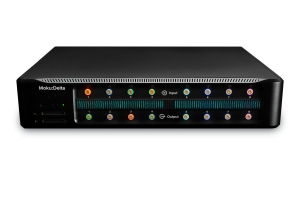
Moku:Delta
Moku:Delta
New
For advanced design and validation
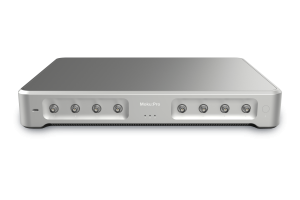
Moku:Pro
Moku:ProFor versatile test and measurement
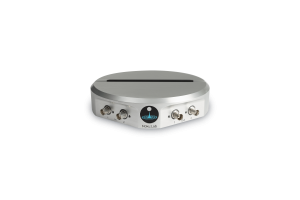
Moku:Lab
Moku:LabFor experimental research labs
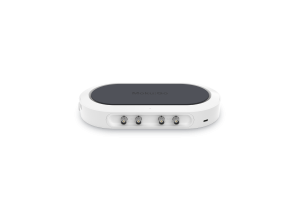
Moku:Go
Moku:GoFor quick testing and debugging
Compare Hardware
Compare HardwareView a side-by-side of all Moku hardware
Technologies
GenInst Studio
New
Generate personalized instruments
Integrated InstrumentsProfessional-grade instruments at your fingertips
Neural NetworkFPGA-powered neural network integration
Multi-Instrument ModeCombine instruments to create a customized test system
Moku CompileCode, compile, and deploy to your Moku's FPGA
Software
MokuOSDownload the Moku app for Windows, macOS, iPadOS & visionOS
APIsPython, MATLAB, LabVIEW
UtilitiesCommand line and graphical tools for file conversion
Instruments
Analysis
Oscilloscope
Spectrum Analyzer
Frequency Response Analyzer
Lock-in Amplifier
Phasemeter
Logic Analyzer / Pattern Generator
Time & Frequency Analyzer
Data Logger
Generation
Waveform Generator
Arbitrary Waveform Generator
Control & Conditioning
PID Controller
Digital Filter Box
FIR Filter Builder
Laser Lock Box
Custom & Utility
GenInst Studio
New
Gigabit Streamer
Custom Instrument
Neural Network
Multi-Instrument Mode
Applications
Optics and Photonics
Microscopy and Spectroscopy
Photon Counting
Quantum Optics
Aerospace and defense
A&D Instrumentation
Component Test
Automated Testing
Semiconductor Test
Control Systems and Bode Analysis
MEMS Testing
AI and Machine Learning
Generative Instrumentation
New
Neural Networks
Education
Education and Research
Resources
App Notes
Blog
Case Studies
Coursework
Guides
Product Documentation
Publications
Webinars
White Papers
Support
Company
Contact Us
About Us
Leadership
Partners
News & Updates
Press
Events Calendar
Careers
Store
Moku:Delta
Moku:Pro
Moku:Go
Upgrade Moku:Pro
Upgrade Moku:Lab
Upgrade Moku:Go
0
Get a quote Buy Now
Build personalized instruments with GenInst Studio in minutes, not months. | Register for the webinar
Case studies

Automating the future at Oregon State University Ecampus with Moku:Go

Modern engineering curriculum encourages remote learning while accelerating student outcomes

February 7, 2023

    Introduction

    Oregon State University (OSU), Oregon’s largest public university, offers a 100% online degree program called OSU Ecampus. This top-ranked provider of online education is growing rapidly, welcoming more students and increasing the variety of degrees offered. In Automating the Future (ENG 100), an introductory, fully online engineering course for students across science, technology, engineering, and math (STEM) majors, OSU Professor Jason Clark uses Moku:Go to introduce 110 students at a time to critical topics in electrical and computer engineering with implications for greater society.

    Moku:Go is the first software-defined instrumentation solution from Liquid Instruments tailored for engineering education and general industry. The software-defined functionality enables Moku:Go to provide 15+ different instruments used in electronics and telecommunication labs.

    With Multi-Instrument Mode (MiM), users can combine pairs of instruments to run simultaneously with lossless interconnection. One of the instruments supported, Moku Cloud Compile (MCC), is a hosted service to create and deploy digital signal processing algorithms (Figure 1). With MCC, users can design algorithms using their favorite tools such as MATLAB and Simulink, then easily deploy them to Moku:Go, where they run in real time, alongside other software-defined instrumentation.

    MCC- IDE

    Figure 1: Moku Cloud Compile example for Moku:Go

    The challenge

    Today, engineering students face complex challenges when pursuing higher education. While commercial technology is quickly evolving, university curriculum usually lags behind. As classrooms turn to remote learning, students are often met with tools that have been there for decades. At OSU, Professor Clark is looking to solve these challenges by engaging students with next-generation tools early in their education, 100% remotely. In ENG 100, most students are beginning their first college-level engineering coursework. Some have not yet chosen an engineering discipline, so it’s important for the course to pique their interest in technology.

    With so many remote students sharing equipment, having a lab full of conventional benchtop instruments leads to unnecessary confusion and difficulty. Since many students have never used these types of tools before, trying to learn the buttons and dials of traditional equipment from a distance can be a difficult task. Additionally, some students have no coding, design, or test experience, so they need tools that are easy to learn during the fast-paced, 10-week quarter. The goal of the course is to interest students in engineering topics, not slow them down with hard-to-use tools and difficult projects. The cross-disciplinary groups needed an effective way to learn, test, and discover remotely, including a method to design and test prototypes outside of a traditional lab.

    The solution

    To introduce students to important engineering topics and tools in such a short time frame, Professor Clark has modernized his lesson plans with Moku:Go. With 15+ integrated instruments in a single device, remote connectivity, and a highly intuitive user interface, students use Moku:Go to quickly gain valuable experience with a variety of instruments, easily collaborate, and explore advanced-level topics sooner. 

    Using five Moku:Go devices, groups of students shared the equipment in organized timeslots. They worked collaboratively with easy data sharing and intuitive displays that show block diagrams of the instruments. This way, students could not only make measurements, but follow the signal path as they test. Professor Clark provided new design prompts centered around current events each week, allowing students to gain familiarity with the full suite of embedded instruments, effectively preparing them for future coursework while brainstorming solutions to real-world problems.

    First, they explored the Moku:Go Oscilloscope, Waveform Generator, and Lock-in Amplifier. Using MiM, students chained together two instruments at a time to further analyze and test their schematics (Figure 2). As the quarter progressed and students rapidly advanced through introductory topics, Professor Clark presented advanced concepts normally reserved for graduate-level students. Using Simulink and Comsol in conjunction with Moku:Go, students imported schematic and sensor designs using MCC to build custom programs, unleashing their creativity. Students with no coding experience designed schematics in Simulink and connected their designs to Moku:Go using MCC.

    MiM with MCC and Oscolloscope for OSU case study

    Figure 2: MiM setup with Moku Cloud Compile and the Oscilloscope

    “Moku can become anything you want it to be — not only the standard test instruments that it has and also replaces, but anything you can draw in a schematic in Simulink,” said Professor Clark. “Your Moku can be that as well, and that’s a really powerful concept.” 

    With nearly endless possibilities and a lowered barrier of entry to engineering, the students could design, prototype, test, and adjust all in one device, from home.

    The result

    With Moku:Go, students learned and developed new ideas and easily tackled advanced concepts during their freshman year, exploring a new topic every week. During one exploration, students used Simulink, Comsol, and Moku:Go together to create a sensor that measured the centripetal acceleration of an object in orbit. Students determined how fast the object would need to spin to reach an acceleration of 9.8 m/s^2. Using Moku:Go alongside other software-defined tools, students conquered real-world problems years ahead of schedule.

    Students walked away from this class excited about engineering, teeming with new ideas and ready to solve societal issues using the tools they learned. Computer science students enjoyed using MCC for applications such as artificial intelligence, while mechanical engineering students brainstormed new ways to use the Moku:Go PID Controller for robotics applications. With the success of last quarter’s students in ENG 100, Professor Clark plans to further improve the curriculum and utilize Moku:Go again next quarter to teach a new group of students. Moku:Go allows students to cover more material in a shorter amount of time due to the accelerated learning and cohesive design life cycle, all integrated into a single device. As a cost-effective, low-footprint tool, Moku:Go replaced the need for cluttered education lab benches. 

    “Why spend all that money on standalone equipment when the specs on Moku are just as good, it’s affordable, and it’s portable?” said Professor Clark. 

    As students move through the rest of their engineering education, the skills and ideas they developed using Moku:Go in Automating the Future will help shape the next generation of technological breakthroughs.

    To learn more about Moku:Go contact us at info@liquidinstruments.com.

    Try Moku in demo mode Download the Moku app → Get answers to FAQs Visit Knowledge Base → Connect with Moku users Join the user forum →

    Other Recommended Case studies

    Case studies
    Phase Stabilization for Quantum Key Distribution with Moku:Pro

    Learn how researchers at the University of Hamburg are using Moku to improve signal fidelity for continuous-variable QKD.

    Featuring: Moku:Pro, PID Controller, Lock-in Amplifier, Laser Lock Box

    Date: Mar 16, 2026

    Case studies
    Enabling Dual-Wavelength Nanosecond Fiber Lasers for Multi-Contrast Photoacoustic Imaging with Moku:Pro

    Learn how researchers at the University of Hong Kong used Moku:Pro to generate synchronized shortwave-infrared nanosecond pulses and stabilize modulation depth for dual-wavelength photoacoustic imaging.

    Featuring: Moku:Pro, Waveform Generator, PID Controller

    Date: Dec-19-2025

    Case studies
    Teaching lock-in detection with Moku:Go

    Learn how students at IIT Madras are gaining hands-on experience in using the Lock-in Amplifier instrument on Moku:Go

    Featuring: Moku:Go, Lock-in Amplifier

    Date: Dec-15-2025

    Back to all Case studies

    Nav

    • Products
    • Instruments
    • Resources
    • Support
    • Company
    • Contact Us
    • Privacy Policy
    • Terms of Use

    Offices

    United States
    (619) 332-6230
    12526 High Bluff Dr.
    Suite 150
    San Diego, CA 92130

    Australia
    +61 2 6171 9730
    243 Northbourne Avenue
    Suite 1, Level 1
    Lyneham, ACT 2602

    Australia
    +61 3 7073 3594
    Suite 5C, Level 5,
    700 Swanston Street,
    Carlton, VIC – 3058


    Follow us

    LinkedIn YouTube X Facebook Instagram

    官方微信

    © 2026 Liquid Instruments. All rights reserved.