

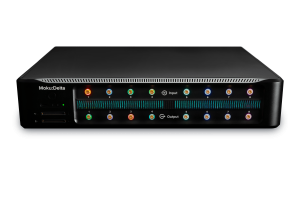
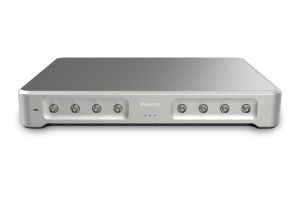
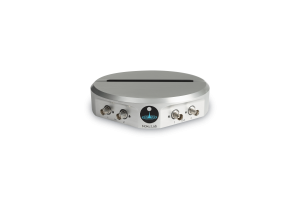
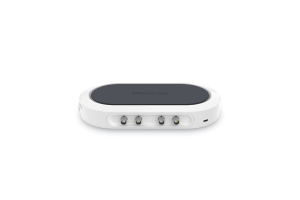

MokuOS 4.4 introduces custom interfaces for GenInst Studio instruments, a new real-time Math block for signal arithmetic, and precision GNSS timestamping on Moku. Together, these capabilities make it easier to move from a specialized measurement need to a complete, application-specific workflow on Moku.
Build complete custom instruments with GenInst user interfaces
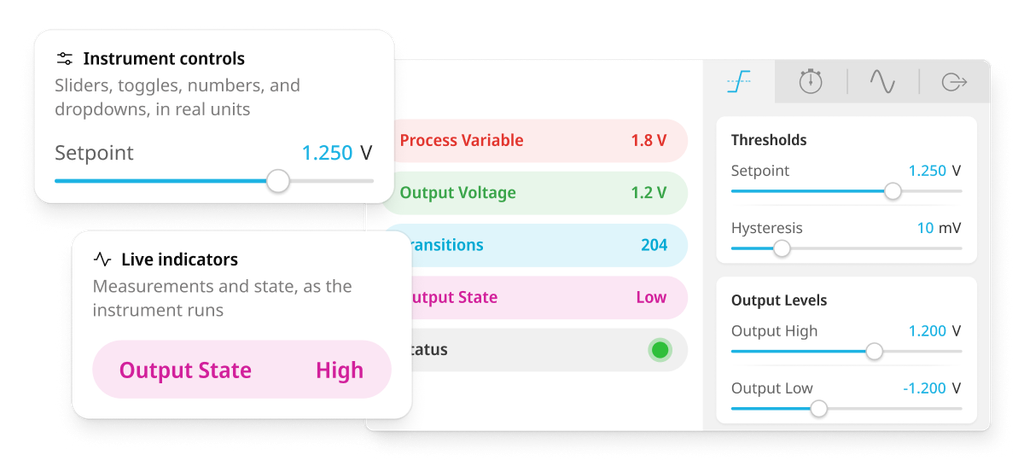
GenInst Studio is an AI-enabled instrument creation platform that lets users describe custom measurement and control requirements in natural language, then generates, tests, and deploys FPGA-based instruments on Moku hardware without requiring FPGA expertise.
With MokuOS 4.4, GenInst Studio now goes beyond generating FPGA-based functionality to creating complete instruments with custom graphical user interfaces. Generating code is one thing. Turning that code into a tested, deployable instrument with a usable interface is another. GenInst Studio handles the development workflow, from defining requirements and generating FPGA logic to testing, deployment, and now custom interface creation.
Create instruments for specific measurement, control, or signal-processing tasks, with interfaces tailored to each application. Adjust key parameters through custom controls, view results in relevant engineering units, and interact with your instrument directly in MokuOS.
Perform signal math operations in real time
The new Real-Time Math block lets you perform arithmetic operations directly on signals inside Moku in real time. Blocks provide dedicated signal processing functions that work alongside Moku instruments, adding functionality to Multi-Instrument Mode signal chains with minimal complexity. The Real-Time Math block is available free to all Moku users with the MokuOS 4.4 update.
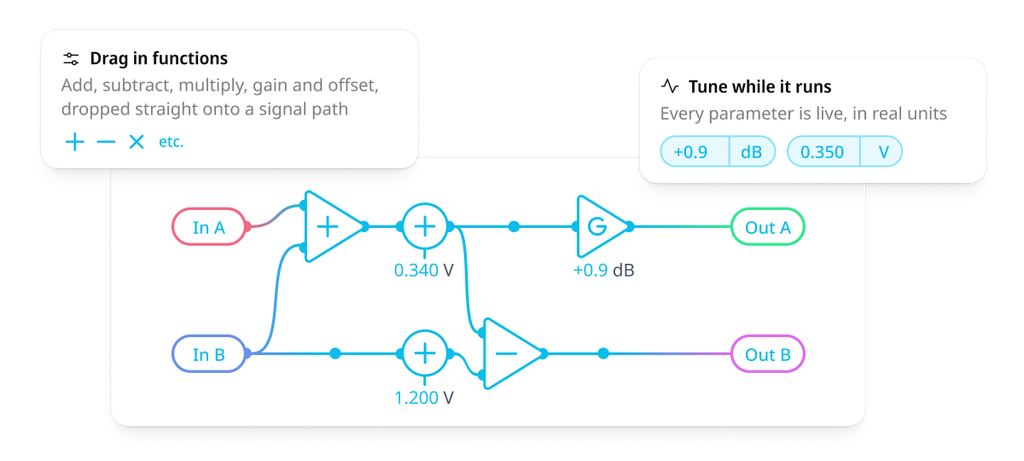
Add, subtract, multiply, or apply gain and offset adjustments without exporting data for offline processing. For example, testing a system’s response to noise typically requires combining signals using external summing hardware or generating a composite waveform in advance. With Moku, you can generate a test signal and noise, combine them with the Real-Time Math block, and observe the result with an Oscilloscope, all on one device.
With calculations performed directly within the Moku signal path at nanosecond-level latency, processed signals can immediately feed into downstream measurement, analysis, or control functions. From combining sensor outputs to comparing channels, the Real-Time Math block makes it easier to build application-specific signal chains without additional hardware or custom FPGA logic.
Synchronize measurements with precision GNSS timestamps
Moku:Delta can now add precision GNSS-referenced timestamps to measurement data, connecting high-performance acquisition with an accurate absolute time reference.
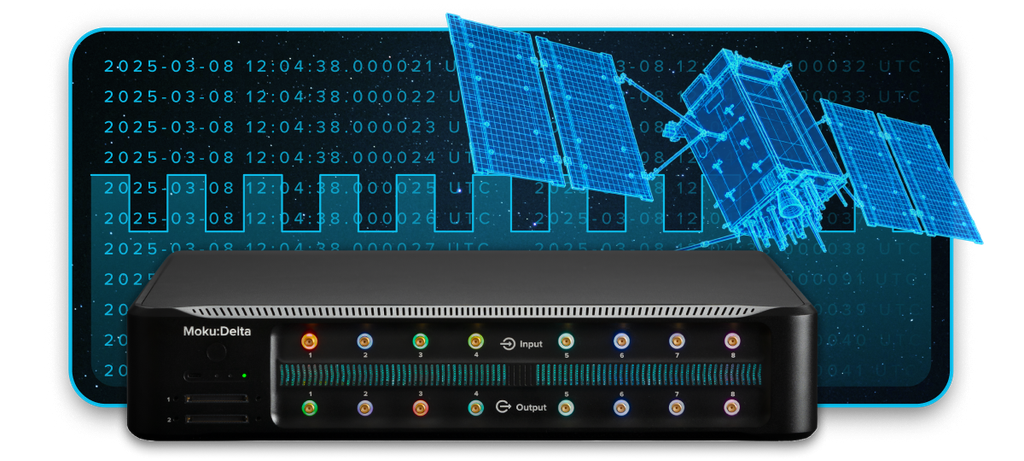
In distributed RF monitoring systems capturing signals at multiple locations, engineers need a common timing reference to compare recordings or determine when an event reached each receiver. Without integrated timestamping, this can require additional synchronization hardware, timing distribution, or custom processing to align recorded data.
With GNSS-referenced timestamps, Moku:Delta can associate acquired data with a common time reference, simplifying the correlation of measurements captured across multiple systems or locations. This supports applications such as distributed sensing, RF event monitoring, TDOA analysis, and aerospace and defense testing.
Combined with Moku’s high-speed acquisition and streaming capabilities, GNSS timestamping brings precision timing into existing measurement setups. Use GNSS-referenced timing with high-resolution Oscilloscope acquisitions, Gigabit Streamer recordings, Time & Frequency Analyzer events, and Data Logger measurements.
More improvements across Moku
MokuOS 4.4 also introduces several enhancements to streaming, digital I/O, and custom FPGA development.
Gigabit Streamer enhancements
The Gigabit Streamer+ now supports six independent input channels, increased from four. Optimized buffer sizes and improved flow control also support reliable, high-throughput streaming with less network configuration complexity.
Open-drain DIO driving on Moku:Go
Moku:Go digital I/O now supports open-drain outputs, expanding compatibility with digital devices and interfaces that use this signaling configuration.
Custom Instrument is now Moku Compile
The Custom Instrument label in MokuOS has been renamed Moku Compile, aligning custom FPGA designs running on Moku with the development environment used to create them.
More ways to make Moku fit your application
Moku is designed around the idea that your instrumentation should adapt as your requirements change. This release expands that flexibility at several layers of the platform.
With timestamping, the Real-Time Math block, and AI-generated custom interfaces, MokuOS 4.4 gives you more control over what you measure, how signals are processed, and how your instruments work.
Explore the latest MokuOS release here. To get started with GenInst Studio, make an account here.
If you’re not seeing the Real-Time Math block after updating, contact support.