

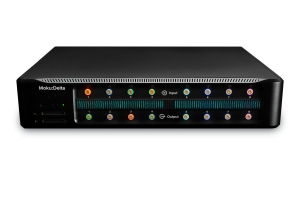
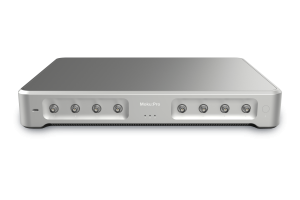


As projects progress, test requirements rarely stay fixed. Engineers are often forced to expand or reconfigure their setups, adding new instruments, PXI modules, or license upgrades. In many cases, teams end up buying high-end instruments for a few critical features—while the majority of the system’s capabilities go unused. This leads to increased system complexity, longer integration times, and higher costs. FPGA-based instrumentation offers a different path. By enabling engineers to tailor instrument behavior at the hardware level, FPGAs make it possible to build exactly what’s needed, without paying for unnecessary features. Historically, FPGA development has required significant expertise and overhead, limiting its accessibility, but with user-friendly platforms like Moku Compile, that barrier is rapidly dropping. This post covers five advantages of FPGA-based customization for test environments, and how the economics and accessibility of the approach are changing.
#1: Real-time processing and deterministic timing
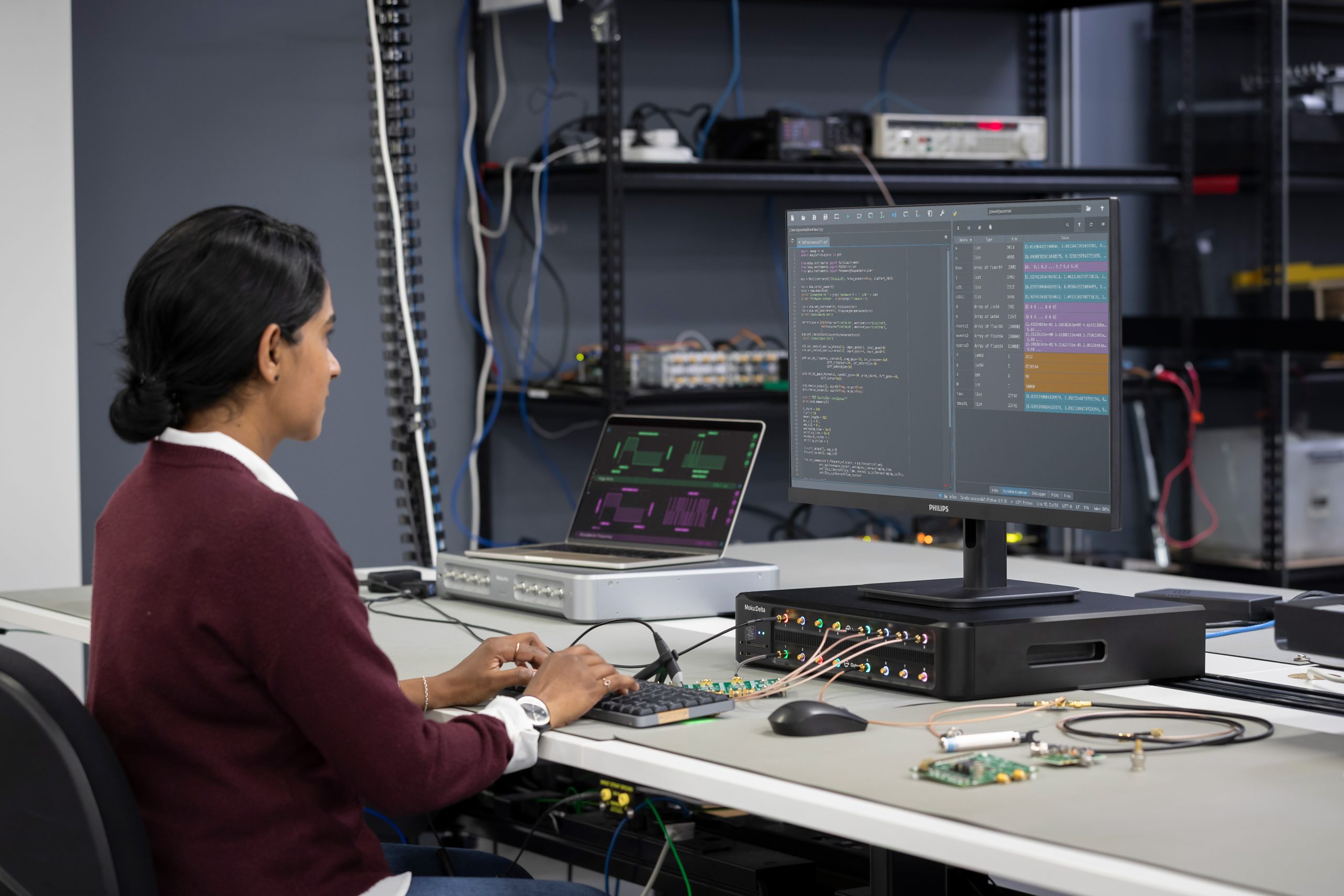
In software-based test environments, timing is ultimately governed by the host PC — subject to OS scheduling, interrupt handling, and interface latency. This makes truly deterministic timing difficult to achieve and limits how quickly a system can respond to real-time signals. FPGA-based platforms eliminate this dependency by running measurement and control logic directly in hardware. With no software layer in the loop, no interface roundtrip, and no processing overhead, timing relationships are deterministic to the clock cycle. This makes the following practical:
- Advanced triggering: Create custom trigger conditions based on multiple signals or complex logic, without software latency in the decision path.
- Multi-channel synchronization: Maintain phase-coherent signal generation and acquisition across channels and instruments, with no inter-instrument skew to calibrate out.
- Closed-loop control: Run control algorithms directly in hardware with minimal latency.
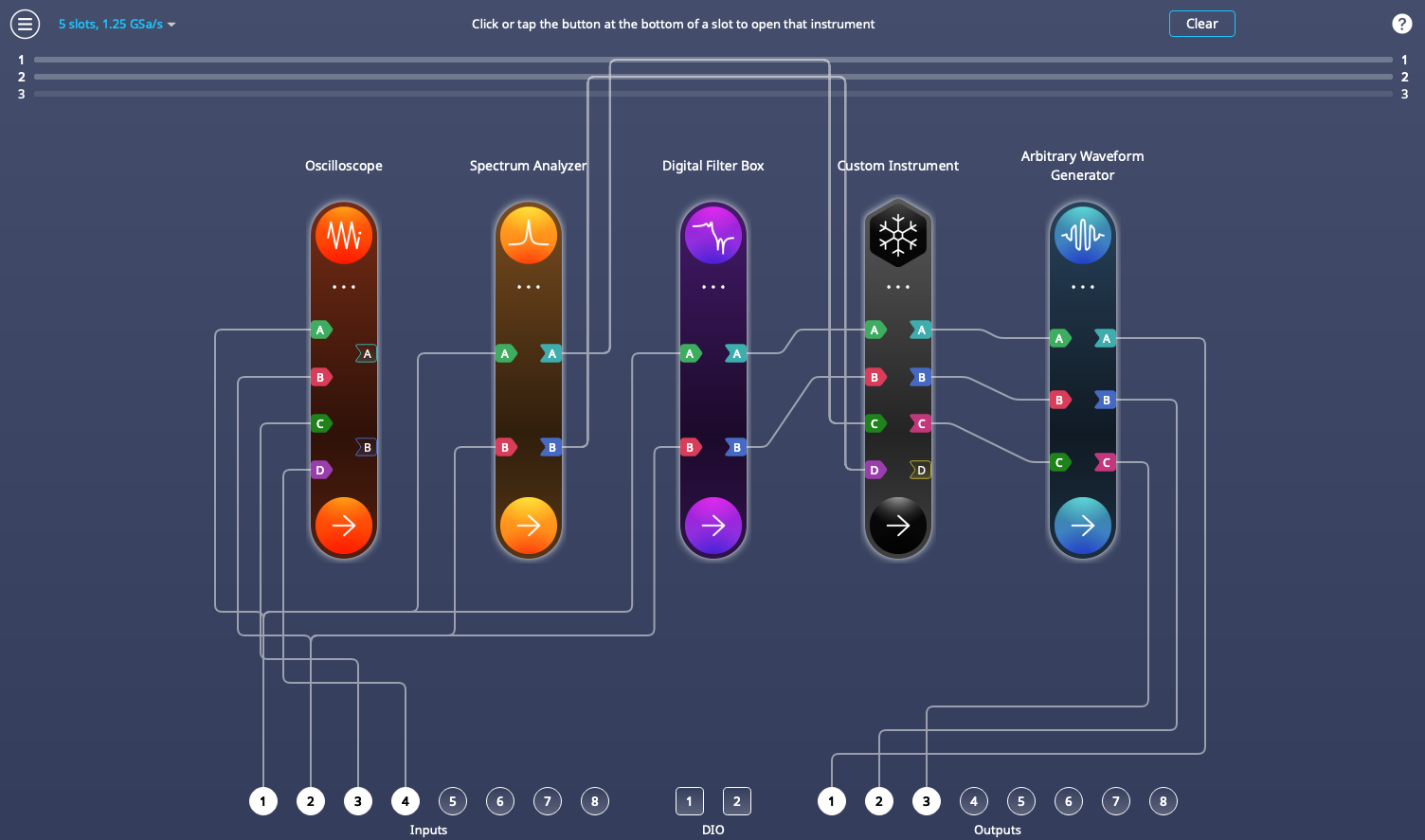
The result is a system where acquisition, processing, and generation happen in real-time, within a single, deterministic environment. Make an account to browse example code here for free.
#2: Inline digital signal processing
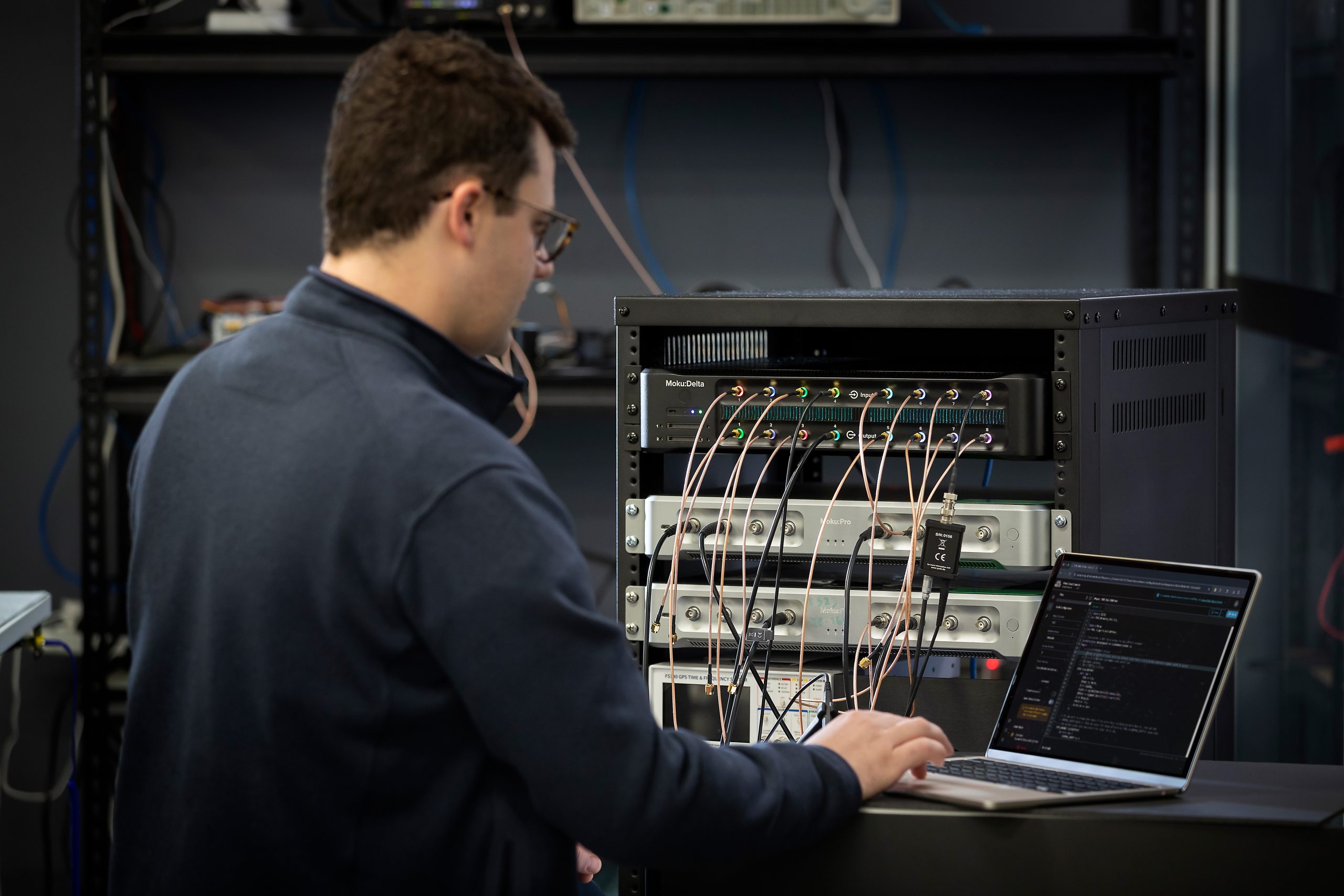
Traditional test setups rely on a combination of instruments and software-based processing. Data is acquired, transferred, then processed externally, introducing latency, gaps in measurements, and limitations in throughput. FPGA-based platforms eliminate this bottleneck by enabling continuous, inline signal processing directly in hardware, without gaps or data transfer delays.
This enables:
- Gap-free processing: Continuous, real-time analysis without missed events.
- High-speed execution: DSP algorithms run at hardware speeds and are not limited by software or data transfer overhead.
- Inline measurement acceleration: Process signals as they are acquired instead of post-processing.
Because this is happening within the same FPGA as the measurement instruments, there is no need to stream results to an external processor. No latency is introduced by interfaces or software layers that could lead to delays between acquisition and analysis.
#3: Rapid prototyping through reconfigurable hardware
When prototyping a new design or experiment, engineers and scientists often face a dilemma. Specialized instruments provide advanced capabilities but at significant cost, while generic FPGA dev boards offer more flexibility, but implementing custom logic requires HDL expertise, complex toolchains, and substantial effort across debugging, timing closure, and hardware interfacing. Reconfigurable instrumentation offers a third path by handling the low-level FPGA infrastructure, like hardware interfacing, clock management, and timing closure. It lets engineers implement exactly the functionality they need without the overhead. Custom signal processing pipelines, control loops, and measurement logic that might otherwise justify an expensive instrument purchase can be built, validated, and iterated on in hours, enabling a much tighter feedback loop between algorithm development and real-world testing.
- Rapid prototyping: Quickly test and refine new algorithms in hardware, on FPGA.
- Iterative deployment: Tight feedback loops between design, measurement, and validation.
- Adaptability: Update test setups as requirements evolve, without changing hardware.
This enables faster experimentation, quicker validation, and shorter development cycles, all without requiring the hardware abstraction, timing, and low-level FPGA programming complexity of traditional user-programmable FPGAs.
#4: Rack consolidation through embedded instruments
Traditional test setups are built from multiple discrete instruments including oscilloscopes, spectrum analyzers, waveform generators, and controllers, each with its own interface, cabling, and configuration. Multi-instrument platforms already replace several boxes on a bench. FPGA-based customization goes further, adding custom DSP and control logic on the same platform as the built-in instruments.
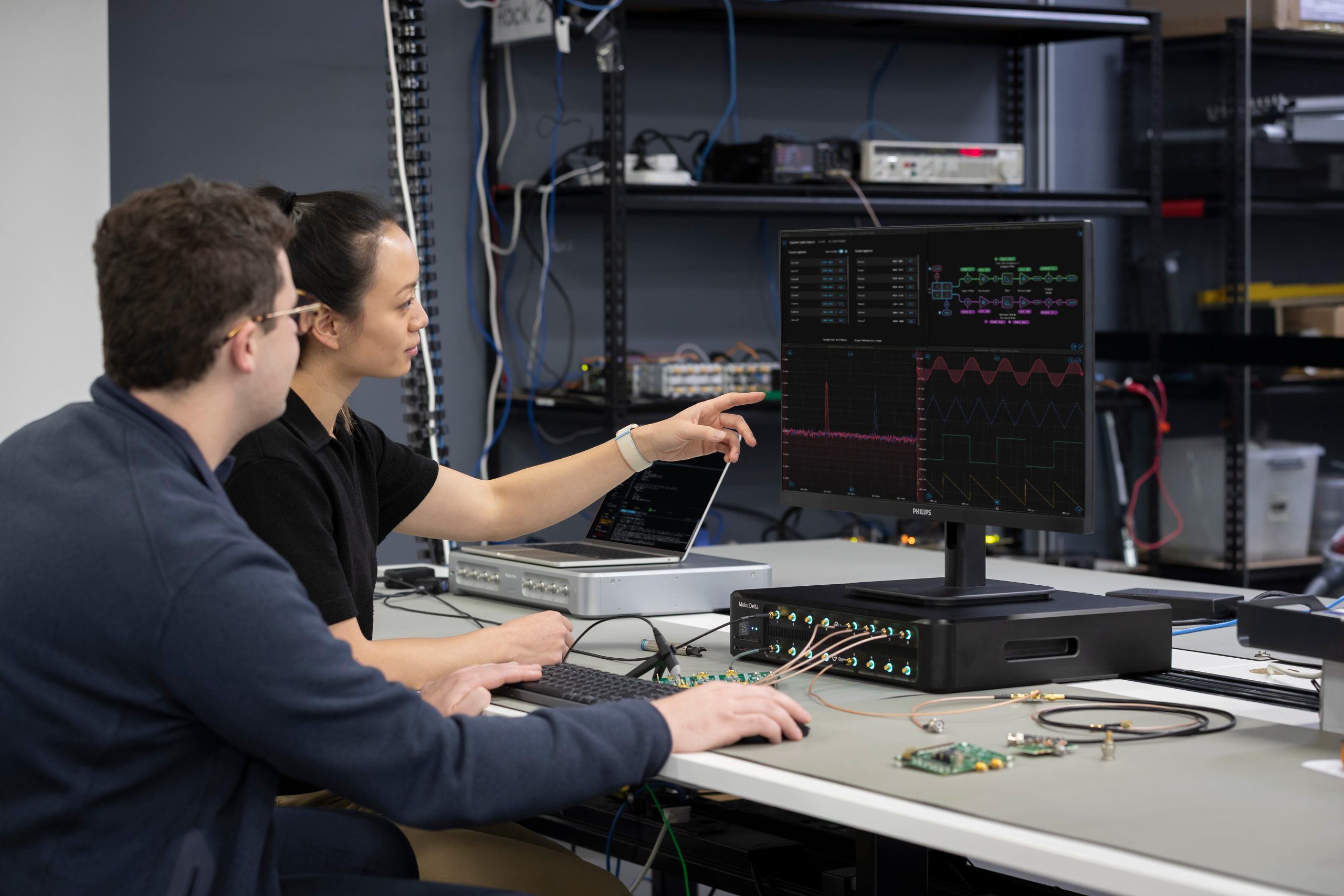
Practically, this means a custom DSP block can sit between an oscilloscope and a waveform generator on the same device, with no cables, no host PC in the loop, and no separate clock domain. The benefits:
- Integrated debugging and evaluation: Use built-in instruments to observe and validate signals during custom processing.
- Rack consolidation: Fewer boxes and cables for more reliable setups, resulting in less room for error, timing issues, and signal loss.
- Simplified integration: No need to synchronize and calibrate excessive equipment, leading to lower operational overhead.
Disrupting the calibration plane
During validation and production testing, engineers compensate for cables and adapters in their setup. When a cable is changed or a DUT is moved, this calibration plane is disrupted, requiring recalibration.
With a consolidated platform like Moku, instruments and signal paths can be reconfigured in software. This reduces the need to modify physical connections, helping preserve calibration and minimize setup changes when test conditions evolve.
#5: Lower total cost of ownership
While individual instruments may seem cost-effective in isolation, traditional setups accumulate hidden costs over time. These include multiple hardware purchases, software licenses and upgrades, annual calibration costs, and the need for spare units and accessories. By consolidating instruments into a single FPGA-based platform, and reducing integration and maintenance overhead, total costs decrease significantly over time. As requirements evolve, new capabilities can be added via programmable FPGA without buying additional hardware. The more you consolidate and reuse the platform, the greater the return on investment.
Conclusion
FPGA-based customization is no longer limited to specialized hardware teams. With more user-friendly tools like Moku Compile, it’s becoming an accessible, scalable approach for engineers who need flexible, high-performance test systems without added complexity. FPGA-based instrumentation lets engineers match the system to the problem instead of the other way around. Moku Compile removes most of what used to make this approach impractical for non-FPGA specialists. And soon, Generative Instrumentation will let engineers describe a measurement in natural language and generate a working Moku instrument from it—further shortening the path from requirement to deployment. For a closer look at how Moku Compile works in practice, learn more here. Ready to try it? Download the software for free.