
Please update your browser. For the best Liquid Instruments experience, update to the latest version of Chrome, Edge, Firefox, or Safari. Update Microsoft Edge.
Liquid Instruments Logo
Products
Hardware Platforms
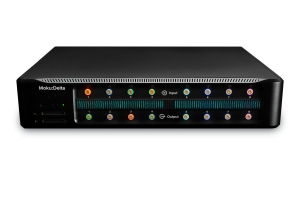
Moku:Delta
Moku:Delta
New
For advanced design and validation
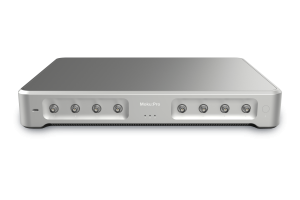
Moku:Pro
Moku:ProFor versatile test and measurement
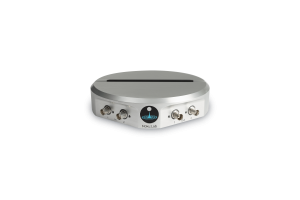
Moku:Lab
Moku:LabFor experimental research labs
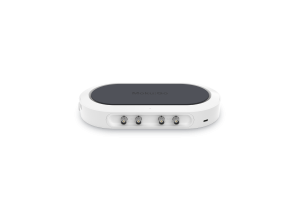
Moku:Go
Moku:GoFor quick testing and debugging
Compare Hardware
Compare HardwareView a side-by-side of all Moku hardware
Technologies
GenInst Studio
New
Generate personalized instruments
Integrated InstrumentsProfessional-grade instruments at your fingertips
Neural NetworkFPGA-powered neural network integration
Multi-Instrument ModeCombine instruments to create a customized test system
Moku CompileCode, compile, and deploy to your Moku's FPGA
Software
MokuOSDownload the Moku app for Windows, macOS, iPadOS & visionOS
APIsPython, MATLAB, LabVIEW
UtilitiesCommand line and graphical tools for file conversion
Instruments
Analysis
Oscilloscope
Spectrum Analyzer
Frequency Response Analyzer
Lock-in Amplifier
Phasemeter
Logic Analyzer / Pattern Generator
Time & Frequency Analyzer
Data Logger
Generation
Waveform Generator
Arbitrary Waveform Generator
Control & Conditioning
PID Controller
Digital Filter Box
FIR Filter Builder
Laser Lock Box
Custom & Utility
GenInst Studio
New
Gigabit Streamer
Custom Instrument
Neural Network
Multi-Instrument Mode
Applications
Optics and Photonics
Microscopy and Spectroscopy
Photon Counting
Quantum Optics
Aerospace and defense
A&D Instrumentation
Component Test
Automated Testing
Semiconductor Test
Control Systems and Bode Analysis
MEMS Testing
AI and Machine Learning
Generative Instrumentation
New
Neural Networks
Education
Education and Research
Resources
App Notes
Blog
Case Studies
Coursework
Guides
Product Documentation
Publications
Webinars
White Papers
Support
Company
Contact Us
About Us
Leadership
Partners
News & Updates
Press
Events Calendar
Careers
Store
Moku:Delta
Moku:Pro
Moku:Go
Upgrade Moku:Pro
Upgrade Moku:Lab
Upgrade Moku:Go
0
Get a quote Buy Now
Build custom optics and photonics measurement instruments. | Register for the webinar
Blog

MokuOS 4.1 adds high-speed data streaming for Moku:Delta and more flexibility than ever before

Learn about the Gigabit Streamer, time correlation measurements, and extra customization options for Moku devices.

December 3, 2025


    Gigabit Streamer now available on Moku:Delta

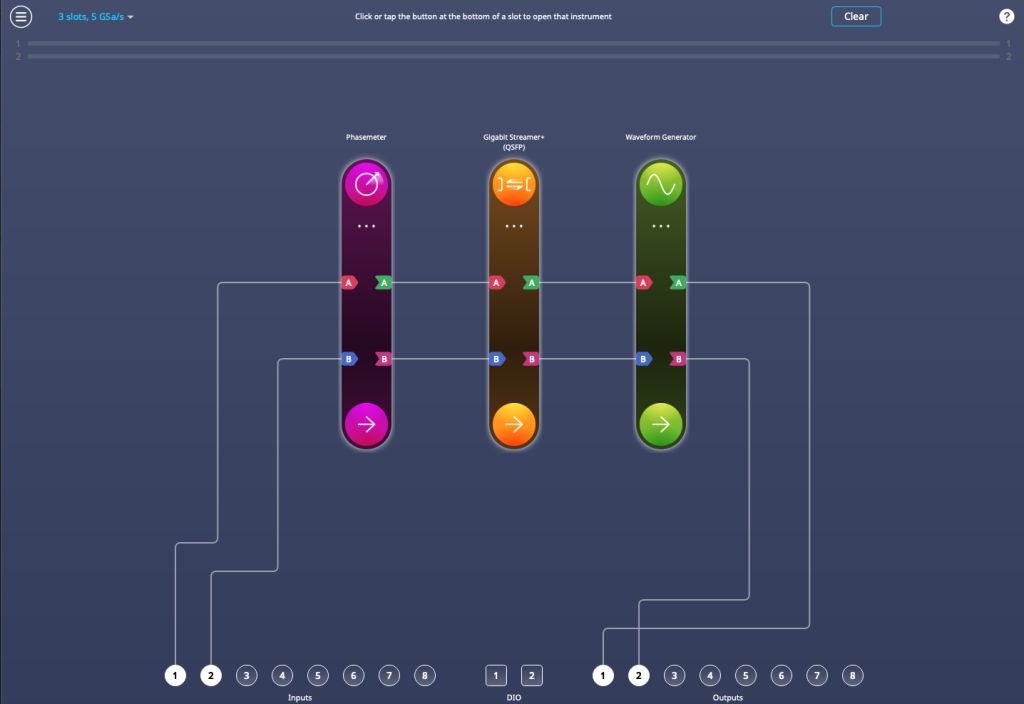
    The new Gigabit Streamer allows Moku:Delta users to transmit and receive data at speeds of up to 312.5 MSa/s through SFP and up to 5 GSa/s through QSFP. Deploy it in Multi-Instrument Mode alongside instruments such as the Phasemeter to continuously stream measurement data to your host PC. With the option to interleave data on up to two ports, the Gigabit Streamer excels in high-speed data recording and playback applications such as quantum key distribution and communications.

    Visit the new Gigabit Streamer Instrument page where you can find the specifications and data sheet. To download MokuOS 4.1 and view the instrument UI in demo mode, click here.
    Configurable input bandwidth for Moku:Pro

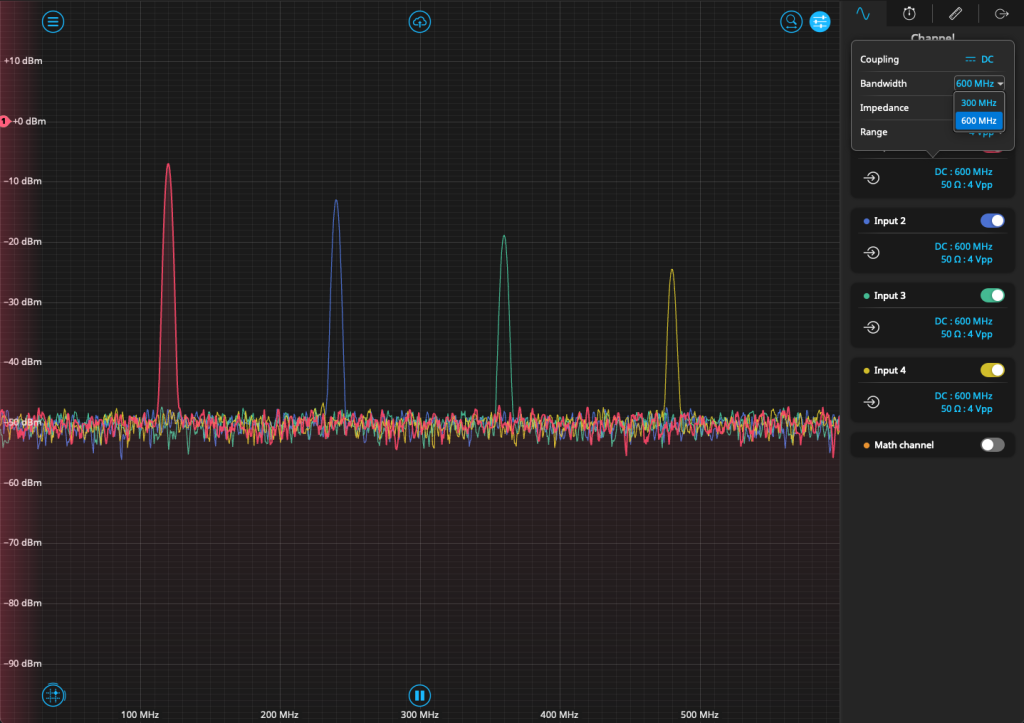
    In addition to the existing signal conditioning options on the Moku:Pro analog frontend, users now have the ability to switch the frequency of the input lowpass filter between 300 and 600 MHz. This allows users working at frequencies below 300 MHz to reduce the effects from higher frequency noise. This change also increases the range of Phasemeter and Spectrum Analyzer from their previous 300 MHz, with both instruments now measuring frequencies up to 600 MHz. You can find this option alongside other Input options (in single instrument mode), or by clicking on the input port number (in Multi-Instrument Mode). 

    Find out more about other Moku instruments on our Instruments page.
     

    New instruments and features for Moku:Lab and Moku:Go

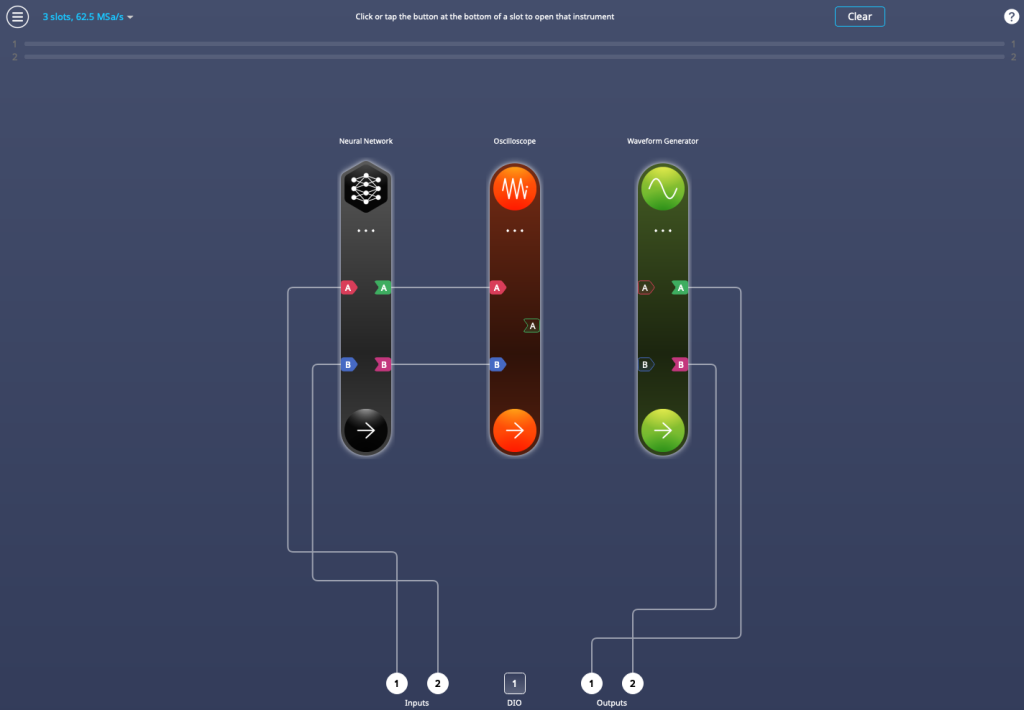
    Last year, the Moku Neural Network was released for Moku:Pro. Now available on Moku:Go and Moku:Lab, users can deploy networks of up to five hidden layers of 80 neurons each, with the choice of five activation functions. To learn more about Neural Networks and their uses in test and measurement, read the blog post on the topic. To get started using the Neural Network on your Lab or Go, read the step-by-step tutorial on building, training, and deploying small-scale networks. 

    Moreover, Moku:Go and Moku:Lab now also feature an optional 3-slot Multi-Instrument Mode, selectable in the top left corner of the configuration screen. Users can select between 2-slot Multi-Instrument Mode for the maximum sampling rate, or 3-slot mode for more flexibility.  
    Measure correlation functions with Moku Time & Frequency Analyzer

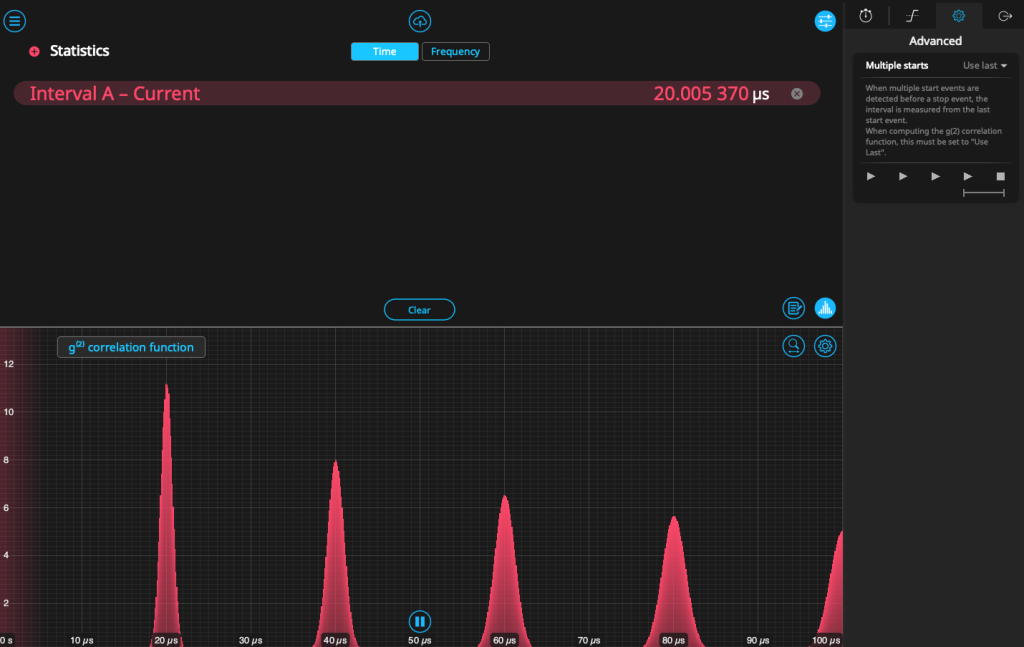
    One of the most requested features for the Moku Time & Frequency Analyzer is the ability to calculate the second-order correlation function g(2)(t) on the fly. This function provides information about the “quantumness” of a light source and is a figure of interest for a variety of quantum optics applications. When plotting event intervals, users can now switch from a histogram of the measured time intervals to the g(2)(t) correlation function, which updates in real time. This enables rapid measurement of correlations between events, and the information can be saved and transferred to your PC for further analysis. 

    For other types of time interval measurements, users can now specify how the Time & Frequency Analyzer handles multiple starts, using either the first or the last “start” event before a stop event is detected. Find this option under the “Advanced” tab on the configuration screen. 
    Learn more about single-photon counting from this webinar, or download the guide on Hanbury-Brown-Twiss measurements here.
    Implement custom instruments

    Moku Cloud Compile has renamed to distinguish it from the web-based compiler. Now called Moku Custom Instrument, it allows deployment of custom HDL code, which is written and compiled through Moku Cloud Compile*. 

    In addition, current users of Moku Custom Instrument will find that they can now read data back from their custom bitstreams through the status registers, and can also search for bitstreams through an in-app browser. 

    For configuration and pricing info, see here. To get started writing custom HDL code, read the application note on the topic. 

    *contact us for information about on-premise compile.

    Update to MokuOS
    Try Moku in demo mode Download the Moku app → Get answers to FAQs Visit Knowledge Base → Connect with Moku users Join the user forum →

    Other Recommended Blog Posts

    Blog
    What is Generative Instrumentation?

    The AI-enabled technology for creating customized test solutions, including specialized measurements, real-time signal processing, and control capabilities

    Date: July 14, 2026

    Blog
    5 Advantages of FPGA-Based Customization for Test & Measurement

    How instruments with user-programmable FPGAs are replacing racks of test equipment, and what that means for your lab.

    Featuring: Moku Cloud Compile

    Date: May 22, 2026

    Blog
    Faster, more powerful real-time customization with MokuOS 4.2

    MokuOS 4.2 unlocks higher bandwidth, faster real-time processing, and more instruments on Moku:Delta, all with a simple software update.

    Date: March 19, 2026

    Back to all Blog

    Nav

    • Products
    • Instruments
    • Resources
    • Support
    • Company
    • Contact Us
    • Privacy Policy
    • Terms of Use

    Offices

    United States
    (619) 332-6230
    12526 High Bluff Dr.
    Suite 150
    San Diego, CA 92130

    Australia
    +61 2 6171 9730
    243 Northbourne Avenue
    Suite 1, Level 1
    Lyneham, ACT 2602

    Australia
    +61 3 7073 3594
    Suite 5C, Level 5,
    700 Swanston Street,
    Carlton, VIC – 3058


    Follow us

    LinkedIn YouTube X Facebook Instagram

    官方微信

    © 2026 Liquid Instruments. All rights reserved.