


Overview
Co-host: Laser Focus World
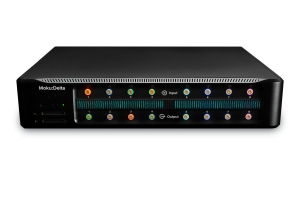
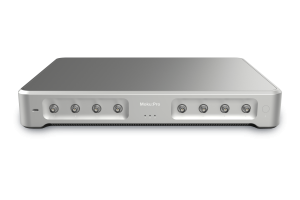
The ability to efficiently detect single photons is critical in a range of applications, from quantum information science and optical communications to medical imaging and LiDAR. To preserve vital data during research, every photon event must be accurately counted and timestamped. This requirement places stringent demands on the detection hardware, including picosecond-scale time resolution and zero dead time between events. In this webinar, we share how reconfigurable, FPGA-based instrumentation can fulfill both criteria with flexibility and speed. Learn how a digital time and frequency analyzer can track up to four events simultaneously, while achieving a time resolution on the order of 10 ps with zero dead time. Watch to see how flexible instrument capabilities including adjustable event thresholds, timestamping, and optional analog outputs enable a wide variety of single-photon detection applications. You’ll also see several live demonstrations, ranging from a Hanbury-Brown-Twiss (HBT)-like correlation measurement to decoding pulse-position modulated (PPM) data. A Q&A session follows the demonstration. For expert insights on questions asked during the presentation, including the advantages of photon counting, how to calculate autocorrelation from interval histograms, and integrating your photon counting setup with external triggers, check out our blog. Presented with Laser Focus World.
What you’ll learn:
- Learn about applications using single-photon detection methods
- See how an FPGA-based time interval analyzer can offer high accuracy with zero dead time
- Find out how to configure event thresholds and intervals for various applications
Who should attend:
- Academic researchers in optical quantum information science
- Researchers working in photonics for industrial and defense applications
- Students wishing to learn more about techniques and instrumentation