
Please update your browser. For the best Liquid Instruments experience, update to the latest version of Chrome, Edge, Firefox, or Safari. Update Microsoft Edge.
Liquid Instruments Logo
Products
Hardware Platforms
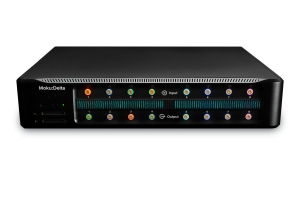
Moku:Delta
Moku:Delta
New
For advanced design and validation
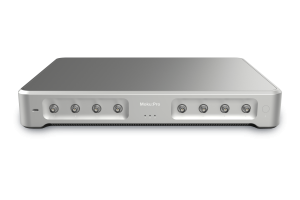
Moku:Pro
Moku:ProFor versatile test and measurement
Moku:Lab
Moku:LabFor experimental research labs
Moku:Go
Moku:GoFor quick testing and debugging
Compare Hardware
Compare HardwareView a side-by-side of all Moku hardware
Technologies
GenInst Studio
New
Generate personalized instruments
Integrated InstrumentsProfessional-grade instruments at your fingertips
Neural NetworkFPGA-powered neural network integration
Multi-Instrument ModeCombine instruments to create a customized test system
Moku CompileCode, compile, and deploy to your Moku's FPGA
Software
MokuOSDownload the Moku app for Windows, macOS, iPadOS & visionOS
APIsPython, MATLAB, LabVIEW
UtilitiesCommand line and graphical tools for file conversion
Instruments
Analysis
Oscilloscope
Spectrum Analyzer
Frequency Response Analyzer
Lock-in Amplifier
Phasemeter
Logic Analyzer / Pattern Generator
Time & Frequency Analyzer
Data Logger
Generation
Waveform Generator
Arbitrary Waveform Generator
Control & Conditioning
PID Controller
Digital Filter Box
FIR Filter Builder
Laser Lock Box
Custom & Utility
GenInst Studio
New
Gigabit Streamer
Custom Instrument
Neural Network
Multi-Instrument Mode
Applications
Optics and Photonics
Microscopy and Spectroscopy
Photon Counting
Quantum Optics
Aerospace and defense
A&D Instrumentation
Component Test
Automated Testing
Semiconductor Test
Control Systems and Bode Analysis
MEMS Testing
AI and Machine Learning
Generative Instrumentation
New
Neural Networks
Education
Education and Research
Resources
App Notes
Blog
Case Studies
Coursework
Guides
Product Documentation
Publications
Webinars
White Papers
Support
Company
Contact Us
About Us
Leadership
Partners
News & Updates
Press
Events Calendar
Careers
Store
Moku:Delta
Moku:Pro
Moku:Go
Upgrade Moku:Pro
Upgrade Moku:Lab
Upgrade Moku:Go
0
Get a quote Buy Now
Build personalized instruments with GenInst Studio in minutes, not months. | Register for the webinar
Blog

Improving the SNR of low-duty-cycle signals with a boxcar averager: Q&A recap

Find out how to deploy a premade boxcar averager tool using Moku Cloud Compile and ensure optimal data collection

February 14, 2025

    This recap and Q+A complements our webinar, Improving the SNR of low-duty-cycle signals with a boxcar averager, co-hosted with Optica on February 13, 2025. In addition to a webinar summary, we’ve included in-depth answers to select audience questions below.

    View recording Configure Moku Cloud Compile

    Webinar recap

    During the presentation, we introduced the concept of a boxcar averager and explained how it can help extract signals from periodic, low-duty-cycle data. We showed how to use Moku Cloud Compile, a versatile instrument included on all Moku devices, to deploy a premade boxcar averager bitstream. Finally, in a live demo, we configured the system parameters and viewed the output from the boxcar averager in real time. To make optimal use of the boxcar averager, we also provided several supporting resources, including the link to Github for downloading the bitstream, as well as the control value spreadsheet and Getting Started Guide.

    Audience questions


    How many signals can you perform boxcar averaging on at once?

    Each boxcar averager bitstream, when deployed using Moku Cloud Compile, can analyze one input signal. Multi-Instrument Mode allows you to run up to four instances of a given instrument simultaneously. This means that users are able to analyze four independent signals concurrently on Moku:Pro, using all of the device’s available input ports.

    What is the minimum gate width and gate repetition rate that can be measured?

    The minimum gate width is determined by the device’s clock rate. For Moku:Pro, this rate is 312.5 MHz, corresponding to a minimum gate width of 3.2 ns. Regarding repetition rate, this strongly depends on both the pulse width and gate width, as the trigger pulses and measurement gates should not overlap with each other. Keep in mind as well that pushing the instrument to the minimum gate width and maximum repetition rate can result in poor data quality due to the small number of points sampled by Moku Cloud Compile in each cycle. We recommend that users keep below a pulse repetition rate of 20 MHz to ensure that the data is not distorted.

    How does applying gain compute the average value?

    In digital signal processing, gain is applied to a value via bit shifting. For our boxcar averager, the gain control ranges from 1/(2^16) to 2^16, where the lower 16 bits are fractional. Please see the control value spreadsheet for reference. This means that you can divide the output value by setting the gain factor to a value less than unity (< 65536 as the input control value). The relationship between the gain factor and the averager length is reflected by the average output scale factor on the control value spreadsheet. For example, if the gain factor is 0.01 and the number of averages is 100, then this value will be unity. If the number of averages is only 10, then this value will become 0.1. For practical use, the best way to compute the actual average value is to set the gain factor to an arbitrary value that gives an unsaturated, non-zero output value and divide that output voltage by the average output scale factor.

    Thanks again for viewing our webinar. We look forward to seeing you at a future presentation.

    For more insightful demonstrations, check out our webinar library for on-demand viewing.

    Try Moku in demo mode Download the Moku app → Get answers to FAQs Visit Knowledge Base → Connect with Moku users Join the user forum →

    Other Recommended Blog Posts

    Blog
    What is Generative Instrumentation?

    The AI-enabled technology for creating customized test solutions, including specialized measurements, real-time signal processing, and control capabilities

    Date: July 14, 2026

    Blog
    5 Advantages of FPGA-Based Customization for Test & Measurement

    How instruments with user-programmable FPGAs are replacing racks of test equipment, and what that means for your lab.

    Featuring: Moku Cloud Compile

    Date: May 22, 2026

    Blog
    Faster, more powerful real-time customization with MokuOS 4.2

    MokuOS 4.2 unlocks higher bandwidth, faster real-time processing, and more instruments on Moku:Delta, all with a simple software update.

    Date: March 19, 2026

    Back to all Blog

    Nav

    • Products
    • Instruments
    • Resources
    • Support
    • Company
    • Contact Us
    • Privacy Policy
    • Terms of Use

    Offices

    United States
    (619) 332-6230
    12526 High Bluff Dr.
    Suite 150
    San Diego, CA 92130

    Australia
    +61 2 6171 9730
    243 Northbourne Avenue
    Suite 1, Level 1
    Lyneham, ACT 2602

    Australia
    +61 3 7073 3594
    Suite 5C, Level 5,
    700 Swanston Street,
    Carlton, VIC – 3058


    Follow us

    LinkedIn YouTube X Facebook Instagram

    官方微信

    © 2026 Liquid Instruments. All rights reserved.