
Please update your browser. For the best Liquid Instruments experience, update to the latest version of Chrome, Edge, Firefox, or Safari. Update Microsoft Edge.
Liquid Instruments Logo
Products
Hardware Platforms
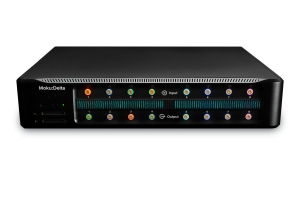
Moku:Delta
Moku:Delta
New
For advanced design and validation
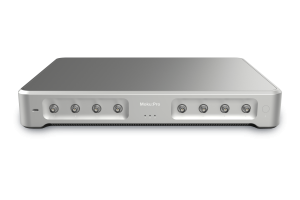
Moku:Pro
Moku:ProFor versatile test and measurement
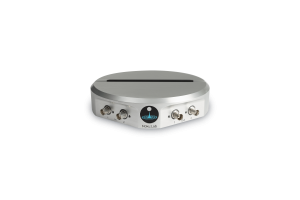
Moku:Lab
Moku:LabFor experimental research labs
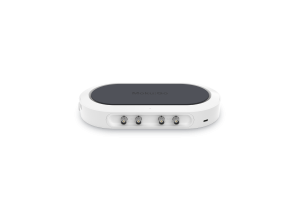
Moku:Go
Moku:GoFor quick testing and debugging
Compare Hardware
Compare HardwareView a side-by-side of all Moku hardware
Technologies
GenInst Studio
New
Generate personalized instruments
Integrated InstrumentsProfessional-grade instruments at your fingertips
Neural NetworkFPGA-powered neural network integration
Multi-Instrument ModeCombine instruments to create a customized test system
Moku CompileCode, compile, and deploy to your Moku's FPGA
Software
MokuOSDownload the Moku app for Windows, macOS, iPadOS & visionOS
APIsPython, MATLAB, LabVIEW
UtilitiesCommand line and graphical tools for file conversion
Instruments
Analysis
Oscilloscope
Spectrum Analyzer
Frequency Response Analyzer
Lock-in Amplifier
Phasemeter
Logic Analyzer / Pattern Generator
Time & Frequency Analyzer
Data Logger
Generation
Waveform Generator
Arbitrary Waveform Generator
Control & Conditioning
PID Controller
Digital Filter Box
FIR Filter Builder
Laser Lock Box
Custom & Utility
GenInst Studio
New
Gigabit Streamer
Custom Instrument
Neural Network
Multi-Instrument Mode
Applications
Optics and Photonics
Microscopy and Spectroscopy
Photon Counting
Quantum Optics
Aerospace and defense
A&D Instrumentation
Component Test
Automated Testing
Semiconductor Test
Control Systems and Bode Analysis
MEMS Testing
AI and Machine Learning
Generative Instrumentation
New
Neural Networks
Education
Education and Research
Resources
App Notes
Blog
Case Studies
Coursework
Guides
Product Documentation
Publications
Webinars
White Papers
Support
Company
Contact Us
About Us
Leadership
Partners
News & Updates
Press
Events Calendar
Careers
Store
Moku:Delta
Moku:Pro
Moku:Go
Upgrade Moku:Pro
Upgrade Moku:Lab
Upgrade Moku:Go
0
Get a quote Buy Now
Build personalized instruments with GenInst Studio in minutes, not months. | Register for the webinar
Blog

What’s In a Name? The Meaning Behind “Moku”

August 3, 2020

    Many of you are using and appreciating a compact platform called Moku:Lab, with 15 instruments that support engineering and physics.  But you always wondered, why is it called Moku:Lab? and what does Moku mean anyway?

    Liquid Instruments has always been a company marked by geographic diversity. At present, our global headquarters is based in San Diego, CA while the R&D team is rooted in Canberra, Australia. Our employees come from China, England, India, Sweden, the Netherlands, and even Texas (it’s like another country), so Liquid Instruments employees are no strangers to the odd-hour video call to collaborate with their trans-Pacific colleagues. 

    When the company was founded by Australian National University Professor Daniel Shaddock, his former student and current Chief Strategy Officer Danielle Wuchenich was already living and working in California. One day, Daniel and Danielle, along with the rest of the Liquid Instruments founding team were on a call in which a decision needed to be made- namely, what in the world are we going to call this platform? Wanting to skip the alphanumeric formula often used in the test and measurement community, the team pulled out a map and looked for a halfway point.

    “Moku” is derived from the Hawaiian word for “island”, mokupuni. When they saw the Hawaiian island chain on the map, the team realized it was perfect. 

    “The idea was … if you have 1 piece of test equipment you could take to an island — it’d be a Moku,” said Danielle when asked about the name. The team also appreciated that the island connotation meshed well with the company name, “Liquid Instruments”. The company name was inspired by the reconfigurable nature of the hardware and software. Just as water can take the form of the vessel it occupies, our product is fluid, flexible, and reconfigurable to suit the needs of the customer. 

    The naming conventions initially went instrument by instrument (Moku:Oscilloscope, Moku:Phasemeter, etc.). Unfortunately, Moku:ArbitraryWaveformGenerator did not have much of a ring to it, so the word after the colon now designates the specific hardware platform, bringing on the christening of Moku:Lab. 

    What’s in a name? It turns out, a lot. It is pretty difficult to condense your product, your company, and your journey into a couple of words, but from our perspective “Liquid Instruments” and “Moku:Lab” do just that. 

     

    Have questions or want a printable version?

    Please contact us at support@liquidinstruments.com

    Try Moku in demo mode Download the Moku app → Get answers to FAQs Visit Knowledge Base → Connect with Moku users Join the user forum →

    Other Recommended Blog Posts

    Blog
    What is Generative Instrumentation?

    The AI-enabled technology for creating customized test solutions, including specialized measurements, real-time signal processing, and control capabilities

    Date: July 14, 2026

    Blog
    5 Advantages of FPGA-Based Customization for Test & Measurement

    How instruments with user-programmable FPGAs are replacing racks of test equipment, and what that means for your lab.

    Featuring: Moku Cloud Compile

    Date: May 22, 2026

    Blog
    Faster, more powerful real-time customization with MokuOS 4.2

    MokuOS 4.2 unlocks higher bandwidth, faster real-time processing, and more instruments on Moku:Delta, all with a simple software update.

    Date: March 19, 2026

    Back to all Blog

    Nav

    • Products
    • Instruments
    • Resources
    • Support
    • Company
    • Contact Us
    • Privacy Policy
    • Terms of Use

    Offices

    United States
    (619) 332-6230
    12526 High Bluff Dr.
    Suite 150
    San Diego, CA 92130

    Australia
    +61 2 6171 9730
    243 Northbourne Avenue
    Suite 1, Level 1
    Lyneham, ACT 2602

    Australia
    +61 3 7073 3594
    Suite 5C, Level 5,
    700 Swanston Street,
    Carlton, VIC – 3058


    Follow us

    LinkedIn YouTube X Facebook Instagram

    官方微信

    © 2026 Liquid Instruments. All rights reserved.