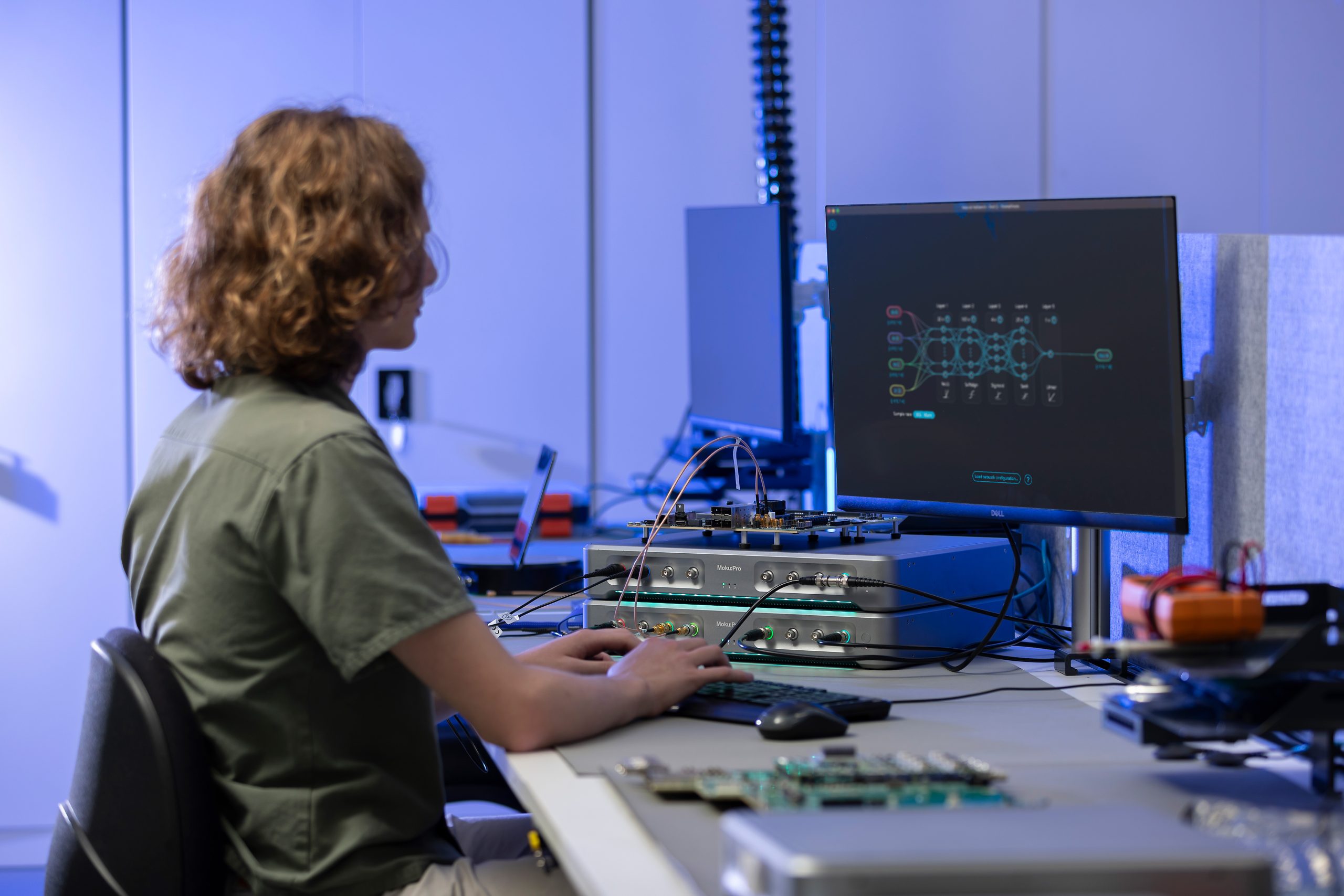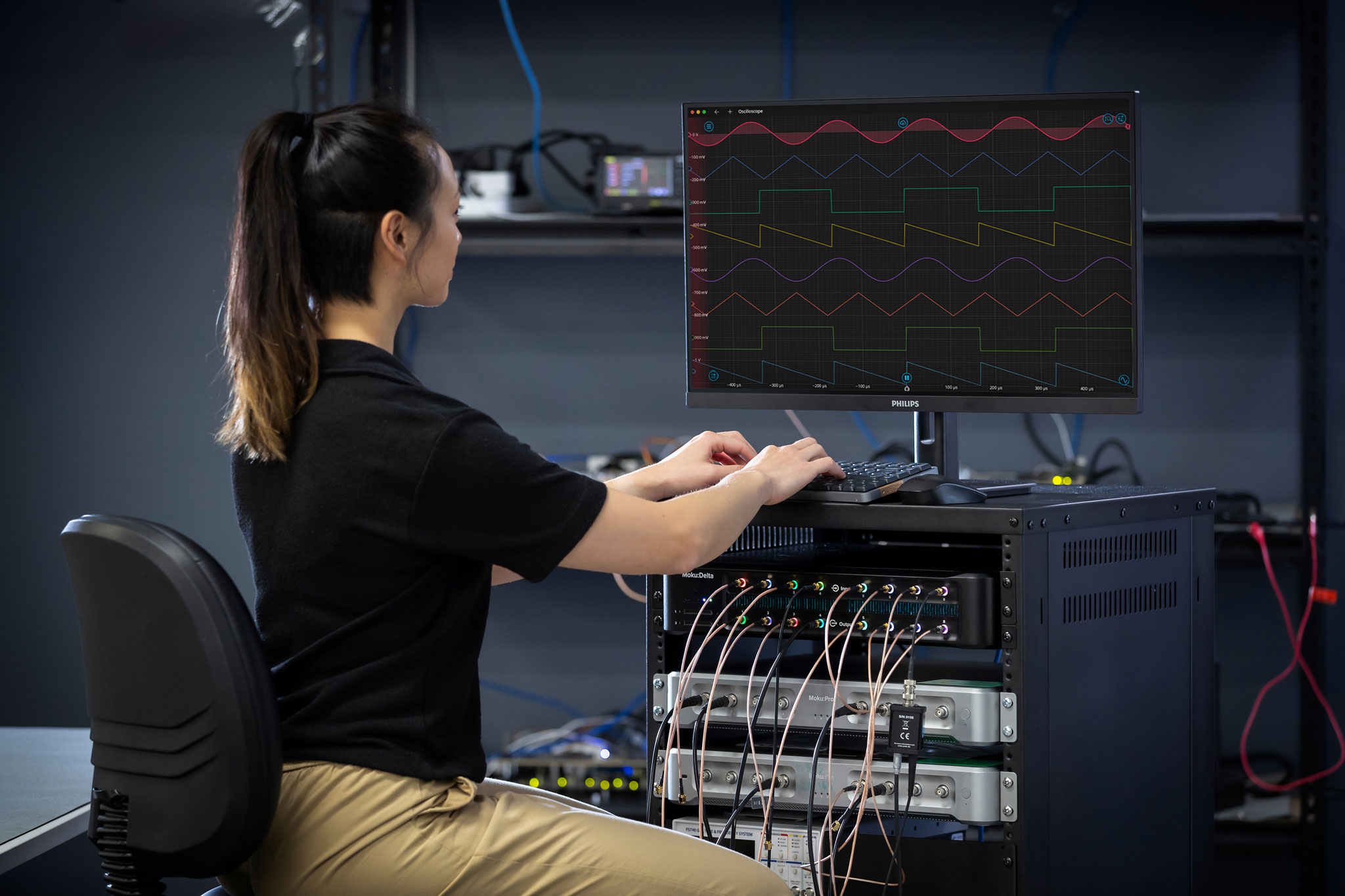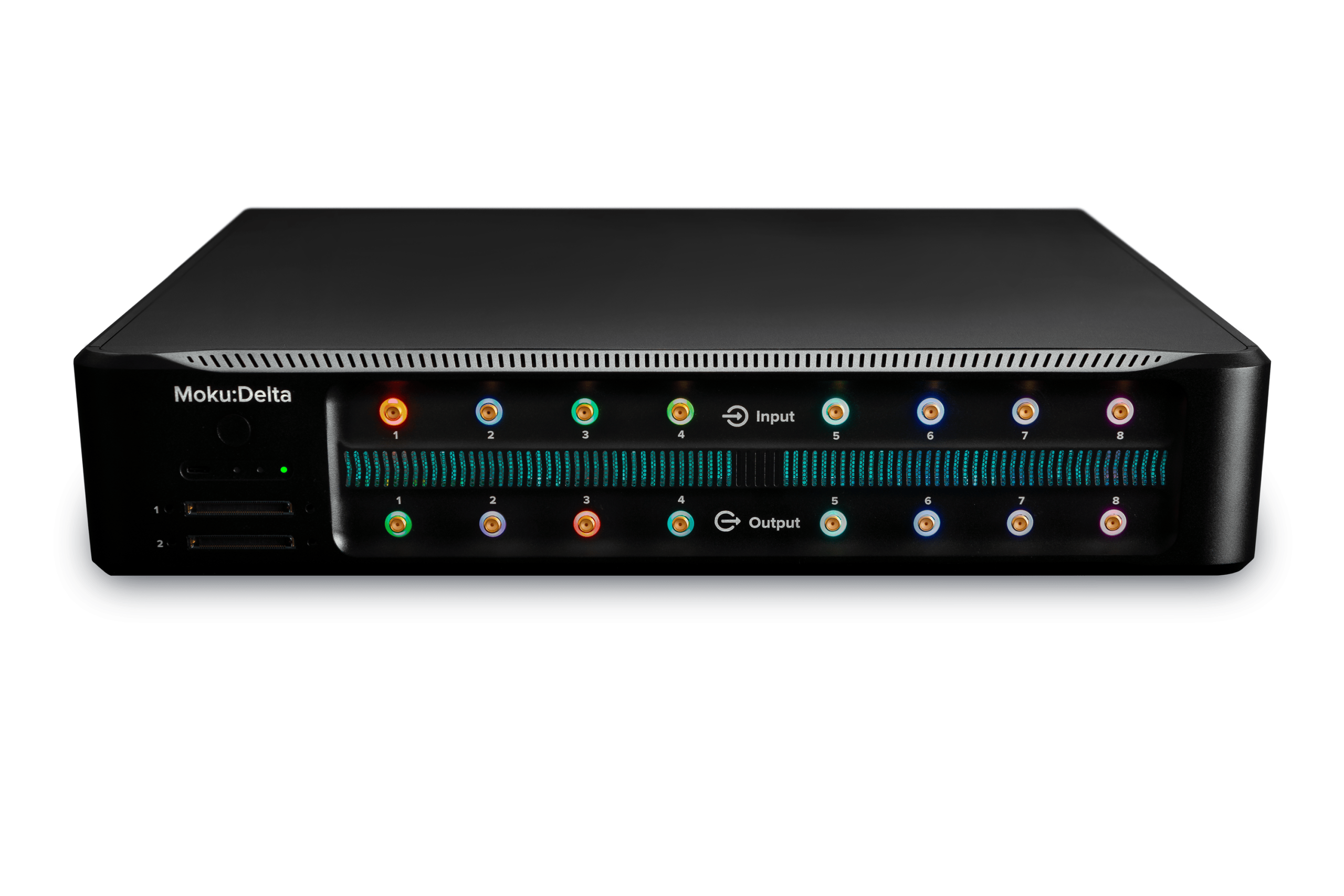
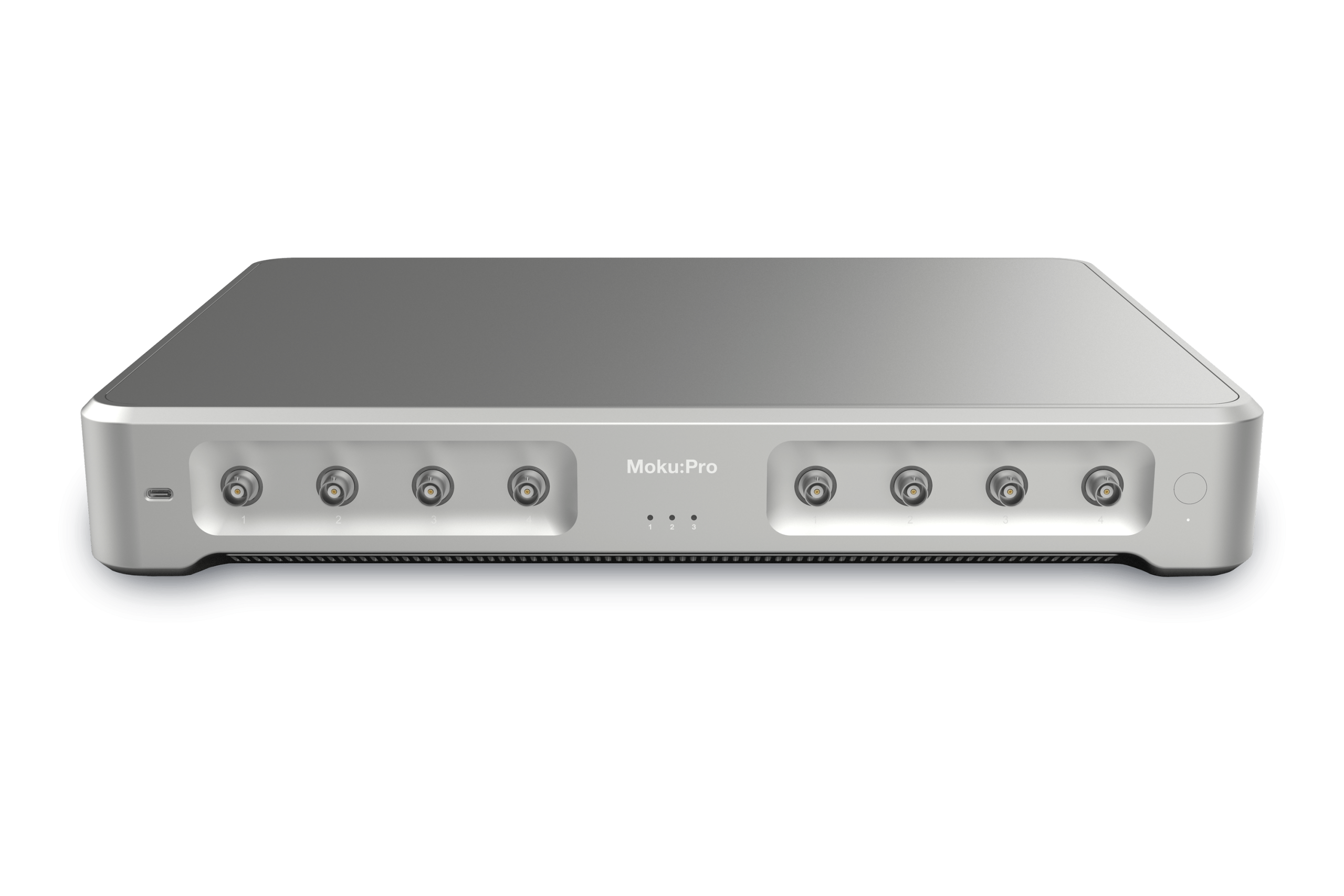
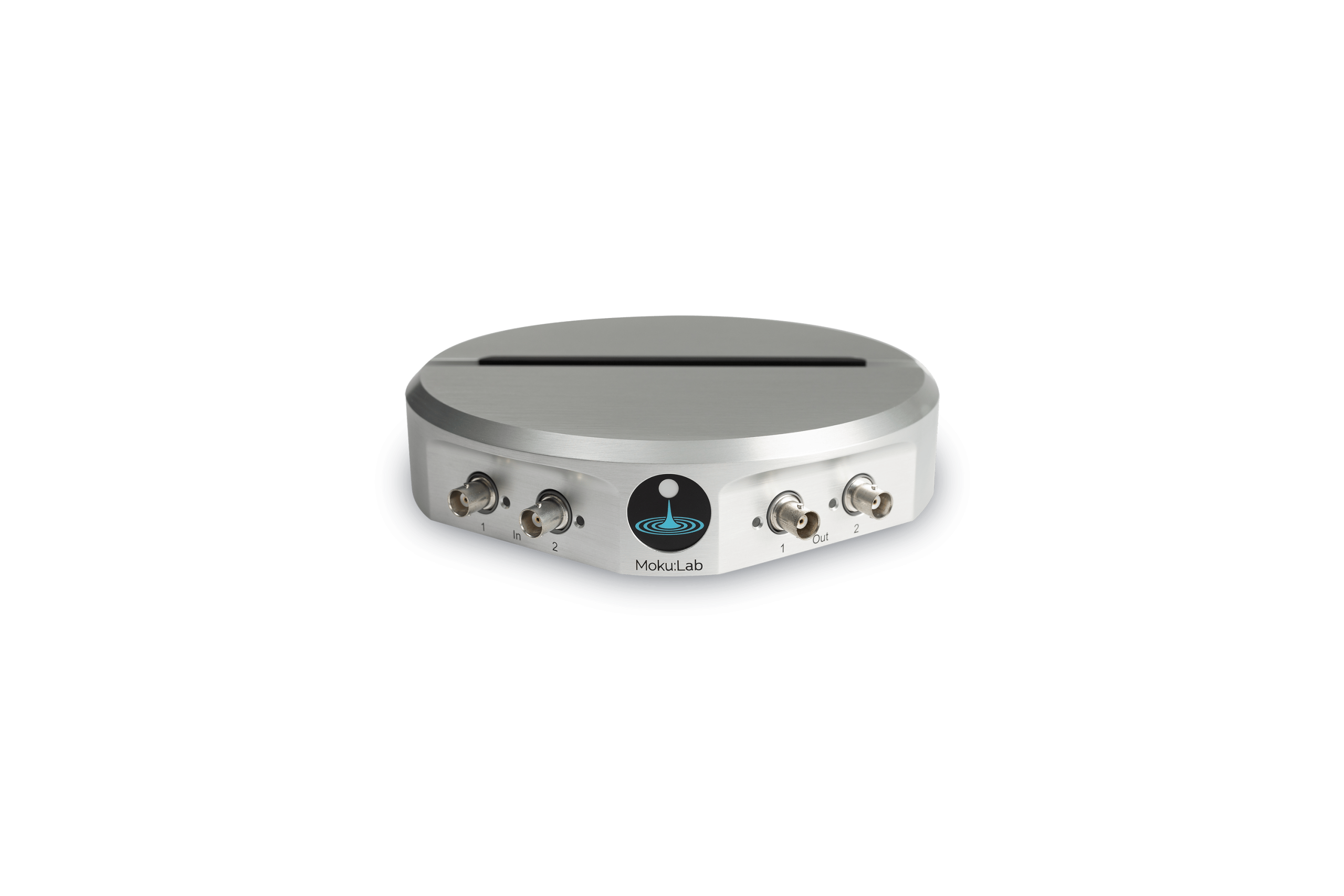
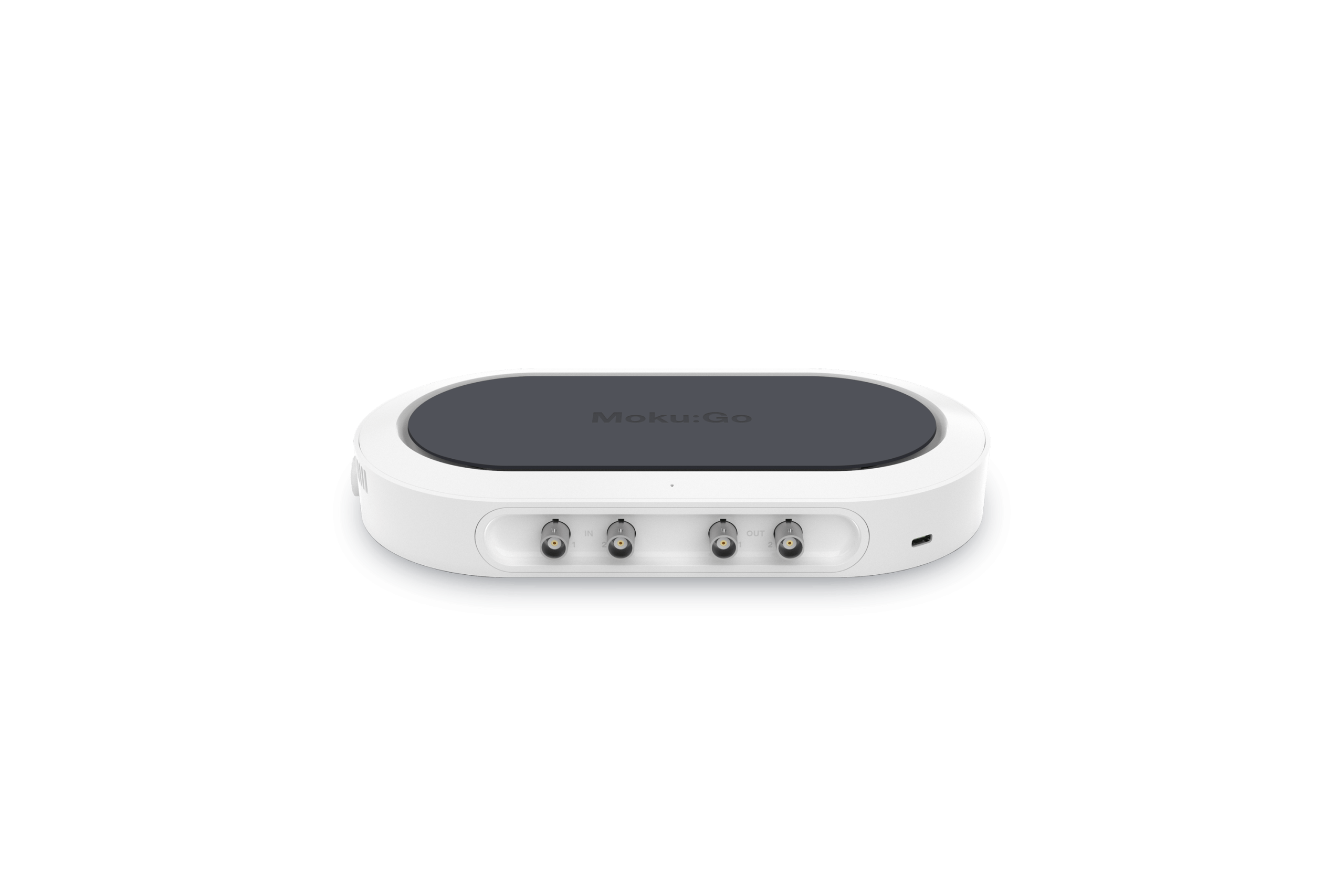

For engineers building advanced test and measurement setups, MokuOS 4.2 introduces key performance upgrades for all Moku devices. For Moku:Delta, Liquid Instruments’ flagship reconfigurable test platform, this release unleashes its full 5 GSa/s sample rate for custom FPGA-based DSP, opens up 6 GHz of analog input bandwidth for undersampling-based RF measurements, and adds a new 5-slot Multi-Instrument Mode for running more high-speed instruments simultaneously. Together, these updates expand what’s possible with Moku:Delta — from high-speed custom DSP and RF signal monitoring to quantum control setups, all in a single device.
High-performance customization without the headache
Moku Compile, which enables users to build and deploy their own algorithms or instruments to Moku hardware, can now be run at the full device sample rate. For Moku:Delta, that means the ability to process 5 GSa/s in real-time, without dropping a sample, for faster in-depth analysis and control. With both cloud-based and local compilation options, engineers can develop their own high-performance features easily within their environment and deploy to their Moku as a Custom Instrument. From prototyping DSP algorithms to accelerating validation testing with real-time analysis and data reduction, Moku Compile combined with Moku:Delta offers test optimization without the overhead.
See signals up to 6 GHz with Moku:Delta
With MokuOS 4.2, Moku:Delta users can now bypass the 2 GHz input signal conditioning to access the full 6 GHz analog bandwidth. This mode uses undersampling to measure signals present in higher Nyquist zones. Useful for detecting harmonics, monitoring RF signals, downconverting to an intermediate frequency for demodulation with the Lock-in Amplifier, or streaming to storage, the 6 GHz mode offers more frequency coverage without the cost of additional expensive equipment. See the application note for a detailed walkthrough.
To download MokuOS 4.2 and try the Moku app in demo mode, click here.
More multi-instrument configurations on Moku:Delta
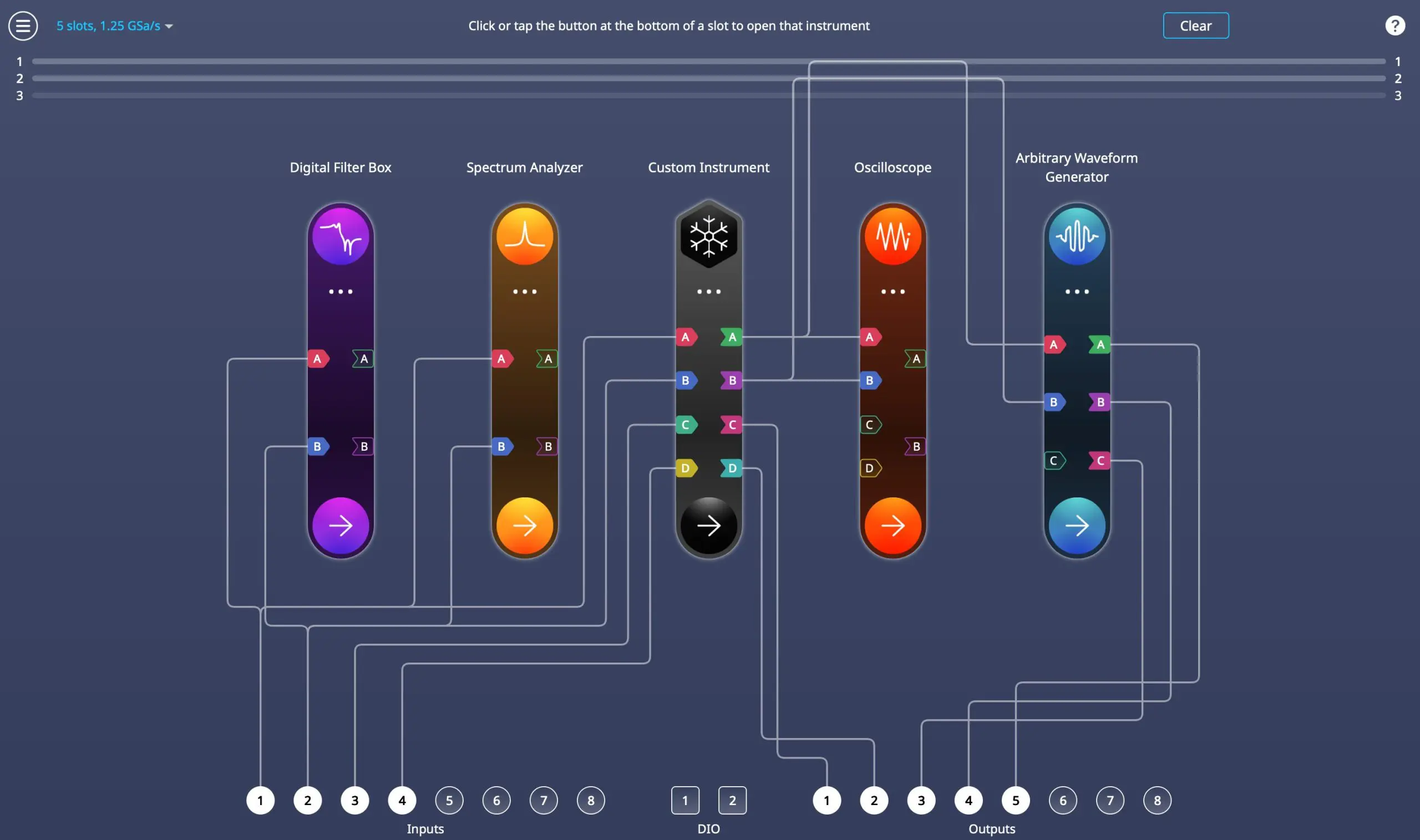
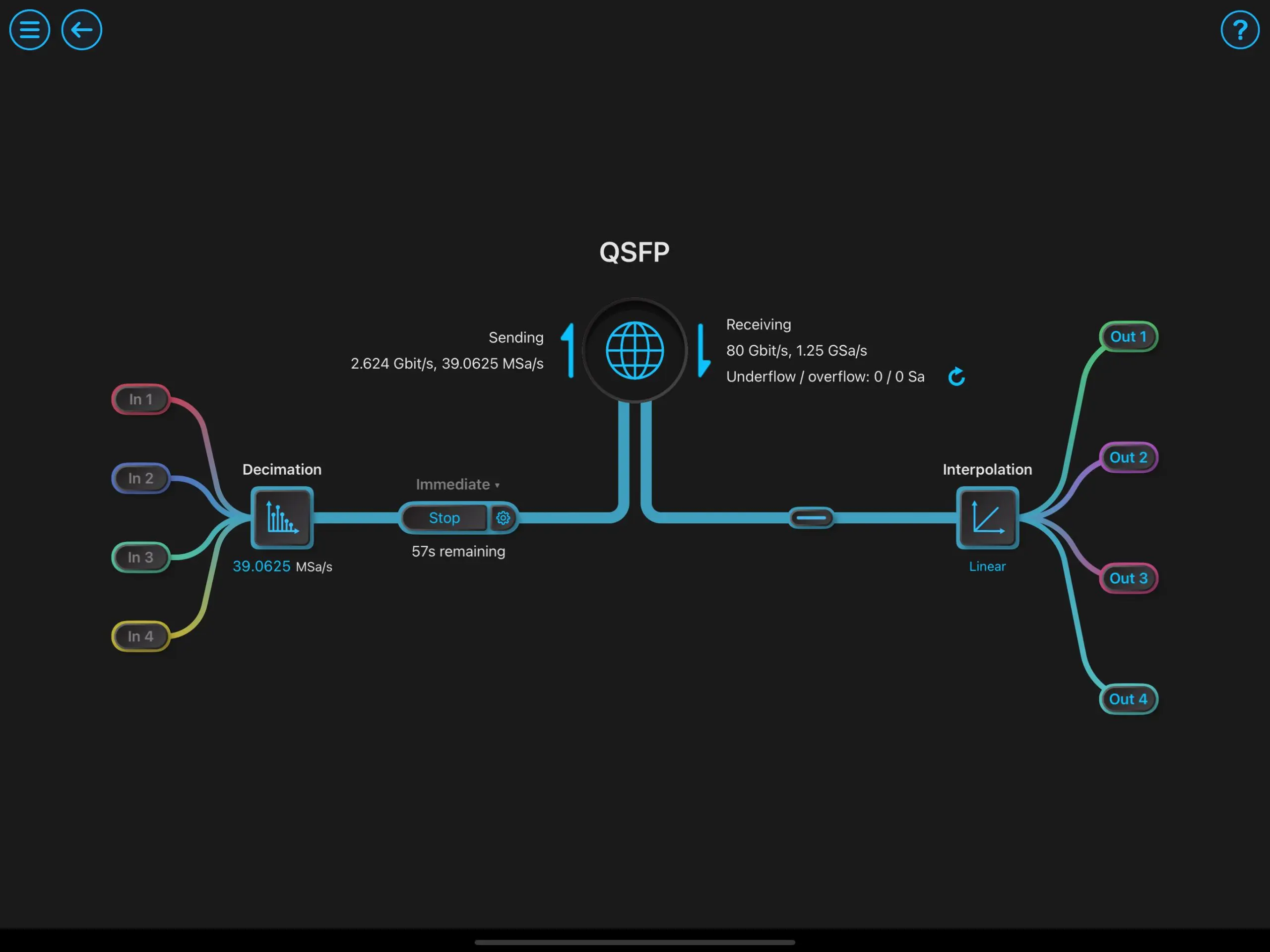
5-slot mode on Moku:Delta using Custom Instrument.
Multi-Instrument Mode can now run 5 instruments simultaneously at 1.25 GSa/s, offering users more ways to tailor Moku:Delta to their testing. The 5-slot configuration joins the existing 3- and 8-slot options, so users can choose faster sampling rates, more instrument slots, or a blend of both. With full RF signal processing chains (generation, conditioning, analysis, control, and logging in one device), electromagnetic spectrum monitoring, and quantum control and readout in a single box, Moku:Delta now supports even more test and experiment setups.
Additional updates in MokuOS 4.2
- 8-channel Waveform Generator on Moku:Delta: generate signals across all eight analog outputs (previously six)
- Standard deviation in Time & Frequency Analyzer: measure jitter statistics for oscillator characterization directly on-device, no data export required
- Trigger rearming for segmented capture in Gigabit Streamer: trigger data collection and re-arm for segmented capture, enabling recording of infrequent events without deadtime
- Laser Lock Box in 3-slot mode on Moku:Delta