
Please update your browser. For the best Liquid Instruments experience, update to the latest version of Chrome, Edge, Firefox, or Safari. Update Microsoft Edge.
Liquid Instruments Logo
Products
Hardware Platforms
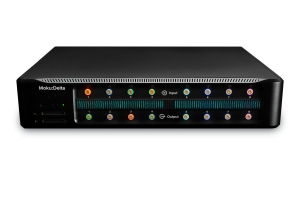
Moku:Delta
Moku:Delta
New
For advanced design and validation
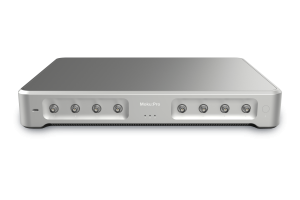
Moku:Pro
Moku:ProFor versatile test and measurement
Moku:Lab
Moku:LabFor experimental research labs
Moku:Go
Moku:GoFor quick testing and debugging
Compare Hardware
Compare HardwareView a side-by-side of all Moku hardware
Technologies
GenInst Studio
New
Generate personalized instruments
Integrated InstrumentsProfessional-grade instruments at your fingertips
Neural NetworkFPGA-powered neural network integration
Multi-Instrument ModeCombine instruments to create a customized test system
Moku CompileCode, compile, and deploy to your Moku's FPGA
Software
MokuOSDownload the Moku app for Windows, macOS, iPadOS & visionOS
APIsPython, MATLAB, LabVIEW
UtilitiesCommand line and graphical tools for file conversion
Instruments
Analysis
Oscilloscope
Spectrum Analyzer
Frequency Response Analyzer
Lock-in Amplifier
Phasemeter
Logic Analyzer / Pattern Generator
Time & Frequency Analyzer
Data Logger
Generation
Waveform Generator
Arbitrary Waveform Generator
Control & Conditioning
PID Controller
Digital Filter Box
FIR Filter Builder
Laser Lock Box
Custom & Utility
GenInst Studio
New
Gigabit Streamer
Custom Instrument
Neural Network
Multi-Instrument Mode
Applications
Optics and Photonics
Microscopy and Spectroscopy
Photon Counting
Quantum Optics
Aerospace and defense
A&D Instrumentation
Component Test
Automated Testing
Semiconductor Test
Control Systems and Bode Analysis
MEMS Testing
AI and Machine Learning
Generative Instrumentation
New
Neural Networks
Education
Education and Research
Resources
App Notes
Blog
Case Studies
Coursework
Guides
Product Documentation
Publications
Webinars
White Papers
Support
Company
Contact Us
About Us
Leadership
Partners
News & Updates
Press
Events Calendar
Careers
Store
Moku:Delta
Moku:Pro
Moku:Go
Upgrade Moku:Pro
Upgrade Moku:Lab
Upgrade Moku:Go
0
Get a quote Buy Now
Blog

MCC + ChatGPT: Customized test equipment for all

March 23, 2023

    Although traditional equipment reliably solves most test and measurement challenges, it can come up short when supporting cutting-edge experiments or designing advanced products with unique requirements. Scientists and engineers may turn to simulation or processing data offline in software, but they can usually find higher-performance solutions through user-programmable FPGAs. These solutions enable users to add custom functionality to an instrument and run it in real time, interacting with real-world signals. However, despite their usefulness, these solutions can be complex and difficult to implement. Moku Cloud Compile (MCC) eliminates these barriers for users familiar with FPGA programming, allowing them to focus on writing their code with no boilerplate and no software download. But what about users with expertise in their domain but little or no FPGA experience?

    Enter ChatGPT, the advanced natural language processing tool that’s recently been dominating headlines around the world thanks to its ability to interact with users in conversational dialogue form. Beyond conversing with users, ChatGPT can generate custom VHDL code that is compatible with Moku devices, bringing the power of FPGA coding to more users than ever before.

    Together, ChatGPT and Moku devices create something much greater than the sum of their parts. For time-constrained users, MCC expertly handles one set of issues (like complicated FPGA programming tools, interfacing, and deploying to real-world hardware), while ChatGPT takes care of another set: writing the actual code. That’s right: MCC makes customization and FPGA programming easy, and ChatGPT makes it even faster. Let’s check it out, using Moku:Pro as an example.

    Consider the code snippet shown in Figure 1 that sets the two outputs to the absolute value of the inputs. The user prompted ChatGPT with the required operation to compute, and ChatGPT did the heavy lifting.
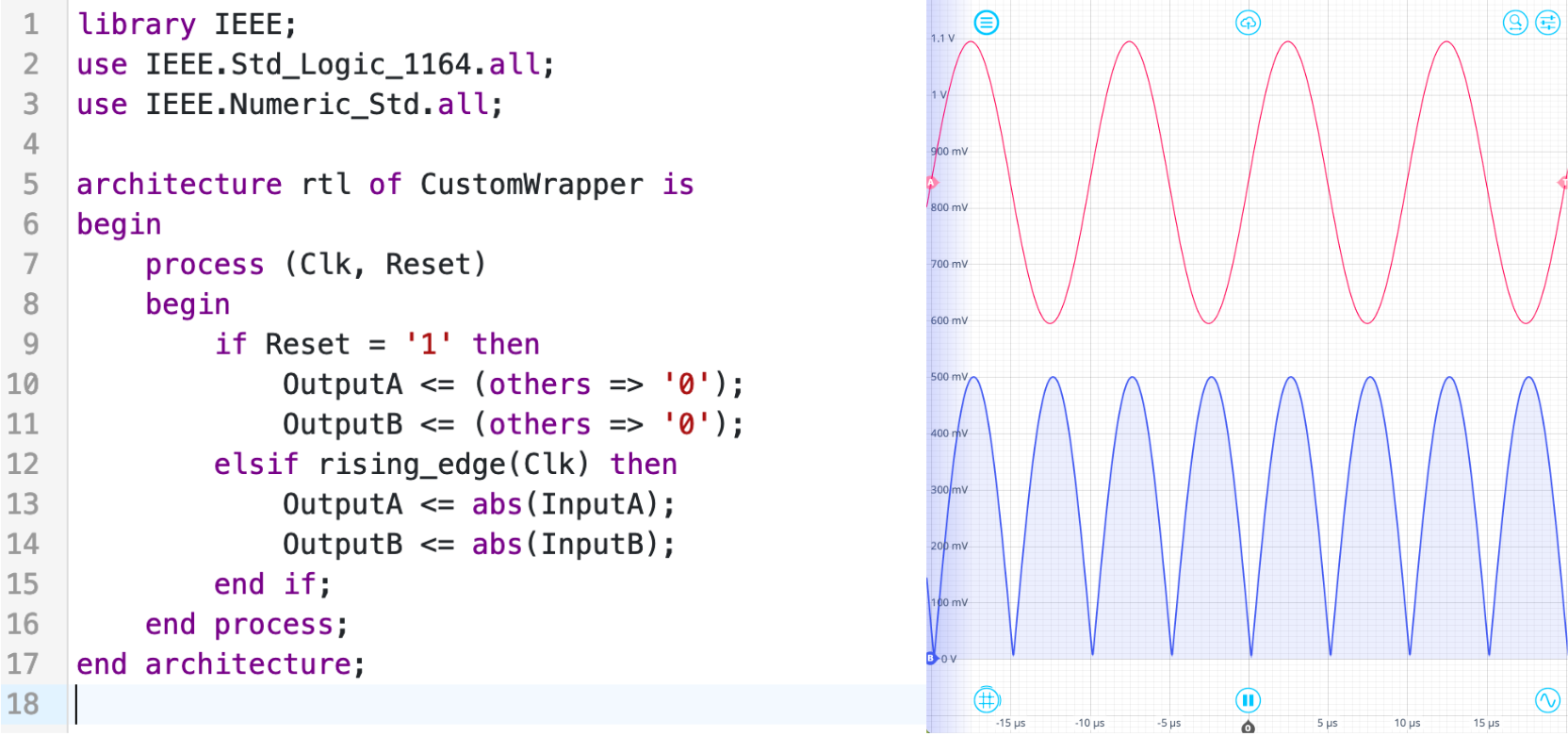
    Figure 1: Code to output the absolute value of inputs, generated by ChatGPT (left), and example input and output waveforms captured from the Moku:Pro Oscilloscope (right)

    Figure 1: Code to output the absolute value of inputs, generated by ChatGPT (left), and example input and output waveforms captured from the Moku:Pro Oscilloscope (right)

    While this is a simple example, ChatGPT can write logic to compute math operations, logical operations, and more complex processing like moving averages and outlier rejection. Furthermore, ChatGPT suggests improvements and optimizations to existing code. For example, if the user wants to add additional functionality to provided modules, such as filtering or signal processing, ChatGPT can recommend modifications to the code that would achieve the desired result. A good starting point would be to review one of the many comprehensive examples provided by Liquid Instruments, and request that ChatGPT modify it to your needs.

    Combining ChatGPT and Moku Cloud Compile opens up endless possibilities for engineers and scientists of all levels of HDL experience. By leveraging the power of natural language processing, users can create custom code that is both simple and effective, without needing any prior knowledge of digital logic design or programming. As test and measurement devices become increasingly powerful, the need for simpler and more accessible programming interfaces becomes more important. By using ChatGPT to generate VHDL code for use with MCC, users can accelerate their development timelines and optimize their workflow like never before. This incredible interoperability opens up new opportunities for researchers, engineers, and scientists to explore the limits of what is possible with Moku devices, and to push the boundaries in applications from quantum optics to electronics research.

    To learn more about how ChatGPT and Moku devices work together, contact us for a personalized demo.

    Try Moku in demo mode Download the Moku app → Get answers to FAQs Visit Knowledge Base → Connect with Moku users Join the user forum →

    Other Recommended Blog Posts

    Blog
    What is Generative Instrumentation?

    The AI-enabled technology for creating customized test solutions, including specialized measurements, real-time signal processing, and control capabilities

    Date: July 14, 2026

    Blog
    5 Advantages of FPGA-Based Customization for Test & Measurement

    How instruments with user-programmable FPGAs are replacing racks of test equipment, and what that means for your lab.

    Featuring: Moku Cloud Compile

    Date: May 22, 2026

    Blog
    Faster, more powerful real-time customization with MokuOS 4.2

    MokuOS 4.2 unlocks higher bandwidth, faster real-time processing, and more instruments on Moku:Delta, all with a simple software update.

    Date: March 19, 2026

    Back to all Blog

    Nav

    • Products
    • Instruments
    • Resources
    • Support
    • Company
    • Contact Us
    • Privacy Policy
    • Terms of Use

    Offices

    United States
    (619) 332-6230
    12526 High Bluff Dr.
    Suite 150
    San Diego, CA 92130

    Australia
    +61 2 6171 9730
    243 Northbourne Avenue
    Suite 1, Level 1
    Lyneham, ACT 2602

    Australia
    +61 3 7073 3594
    Suite 5C, Level 5,
    700 Swanston Street,
    Carlton, VIC – 3058


    Follow us

    LinkedIn YouTube X Facebook Instagram

    官方微信

    © 2026 Liquid Instruments. All rights reserved.