



Multi-Instrument Mode
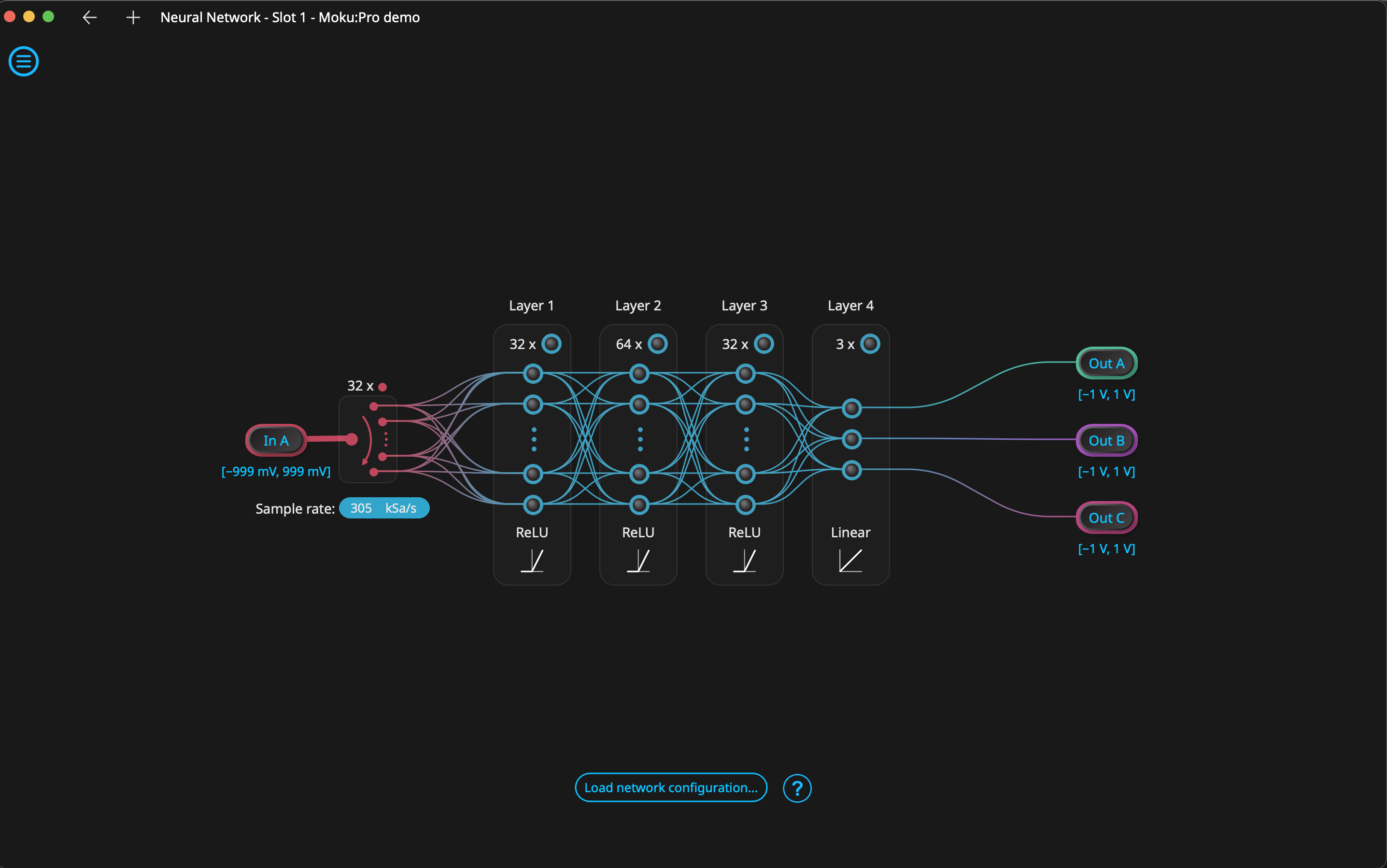
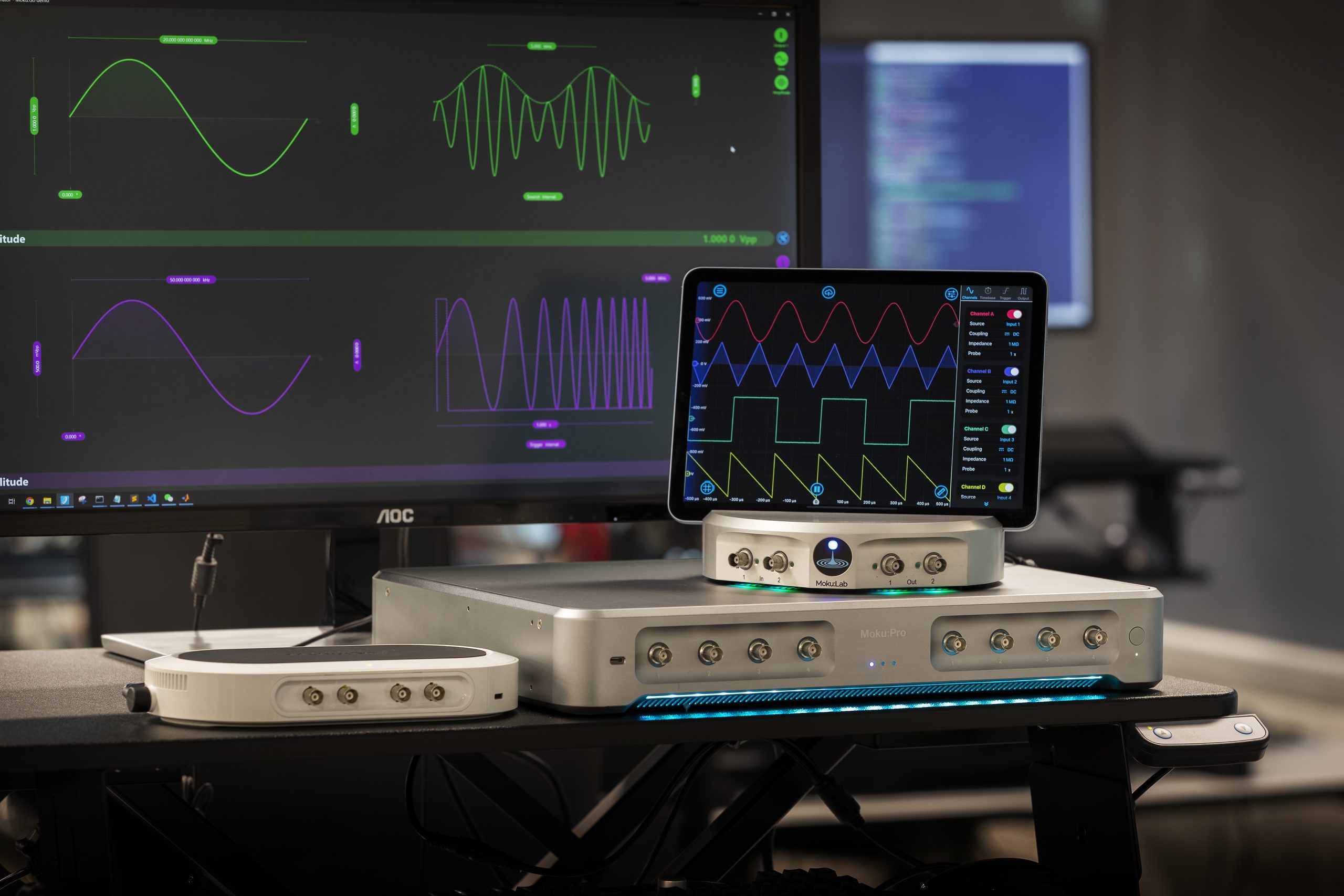
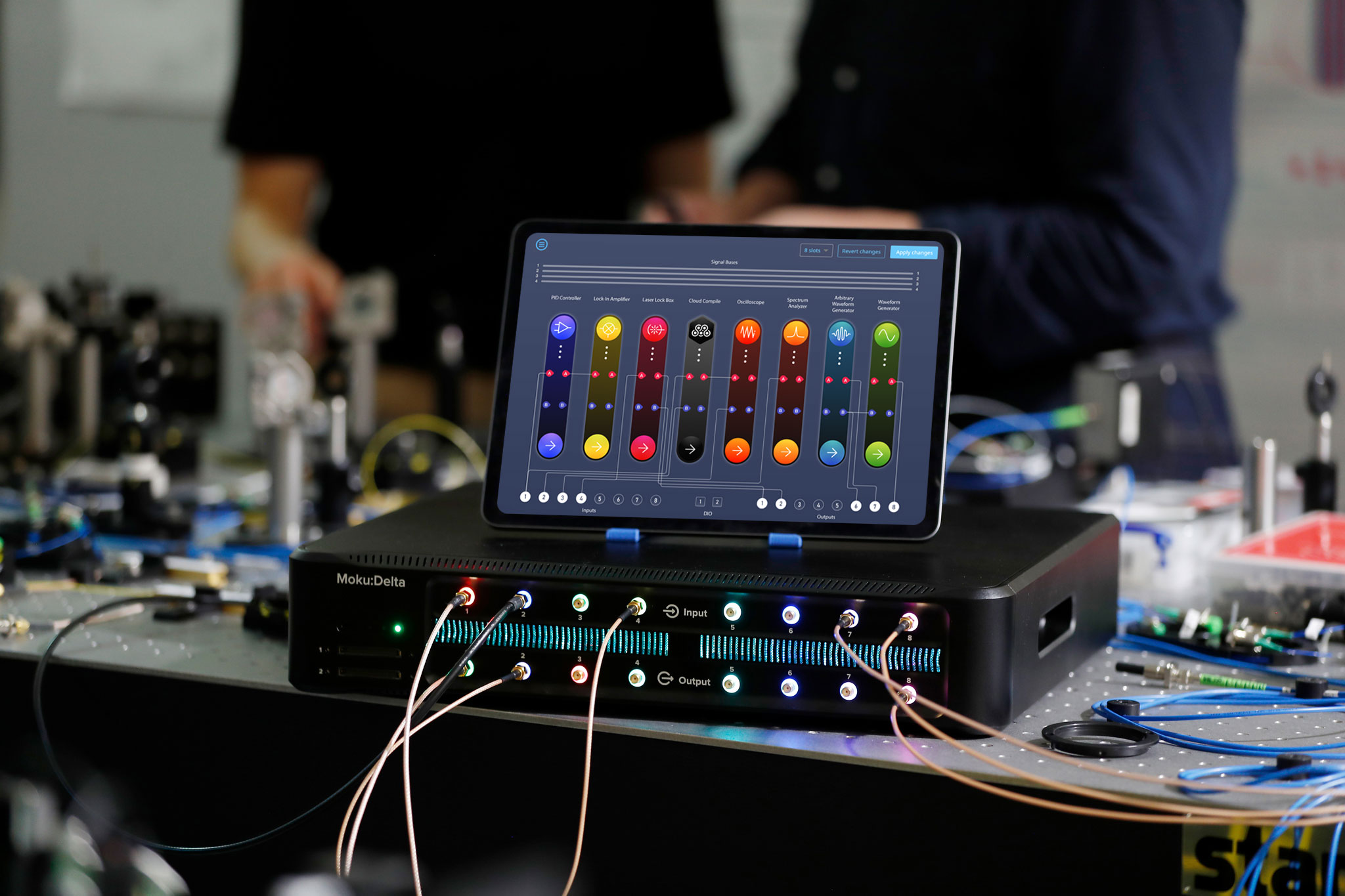
Run up to eight instruments simultaneously on a single device. Build flexible, custom test sequences and powerful signal processing pipelines with the ability to swap instruments on the fly.
Multi-Instrument Mode examples
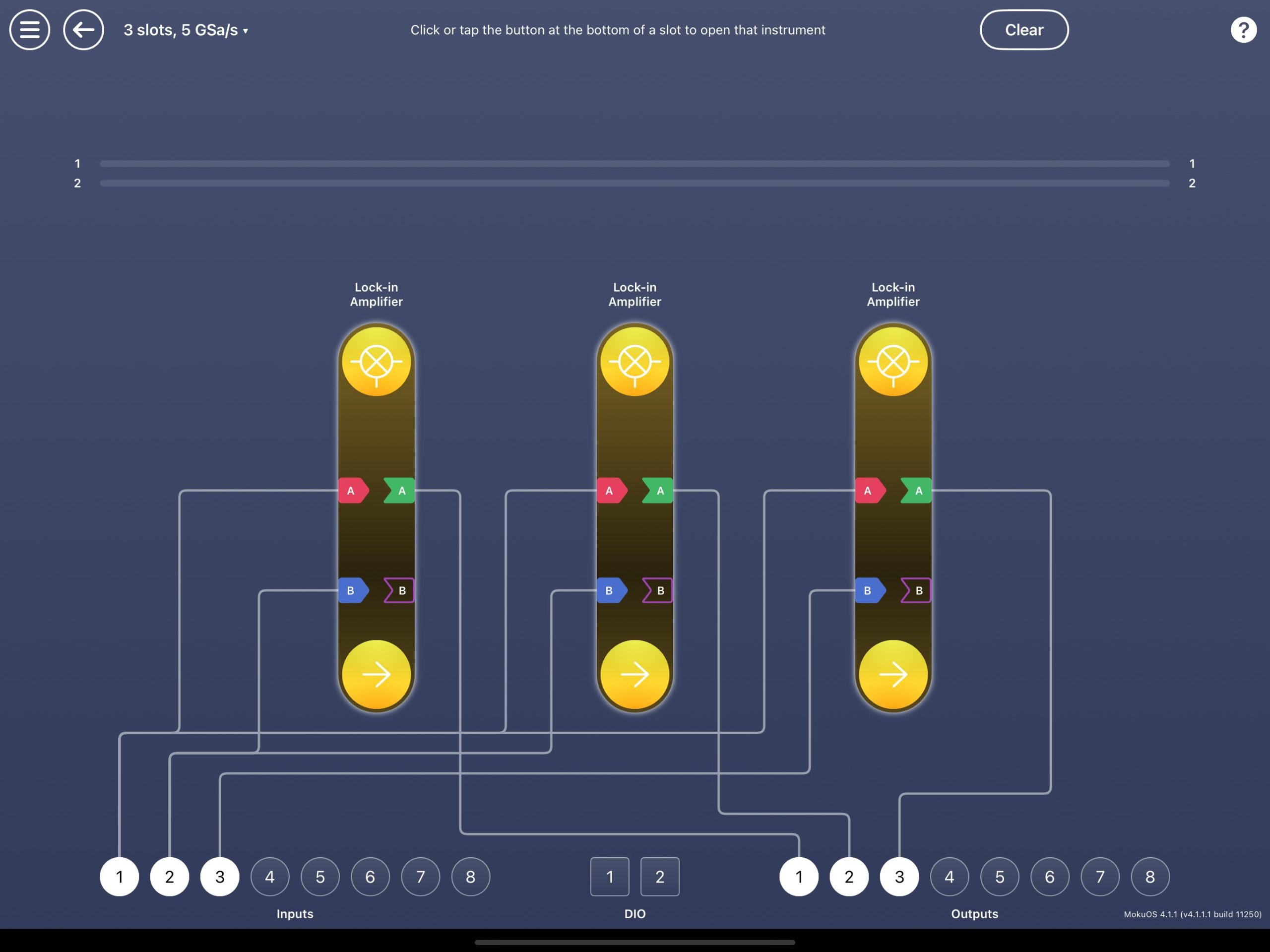
Multi-frequency lock‐in amplifier
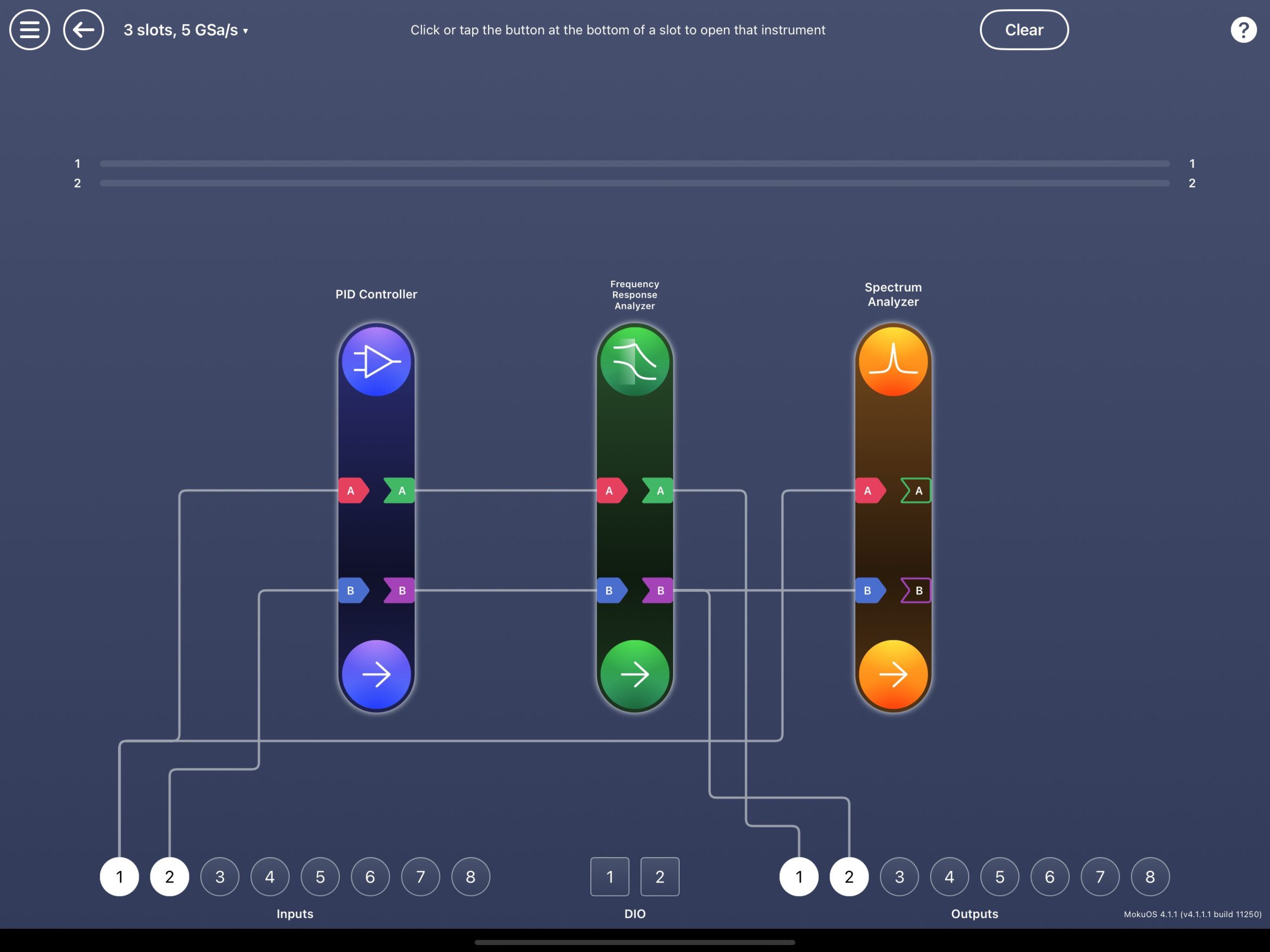
Closed-loop controller
Generate and control complex modulated waveforms

Stimulus and response in one
Pulse-width demodulation decoding

Engineered for demanding applications

Parallel testing

Signal pre-emphasis

Multi-frequency
lock‐in analysis

Delay generation

Custom signal processing
Specifications
Multi-Instrument Mode runs on all Moku devices. Compare the specifications to choose the right device for your application.
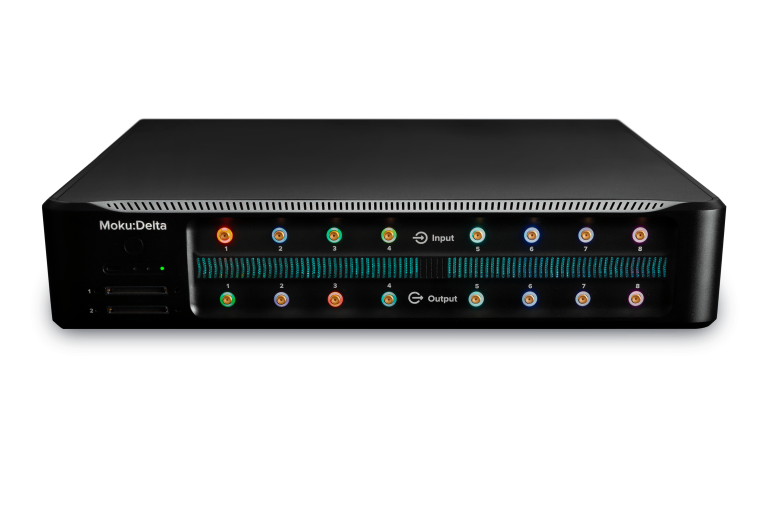
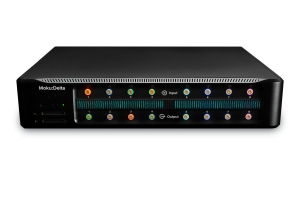
Moku:Delta |
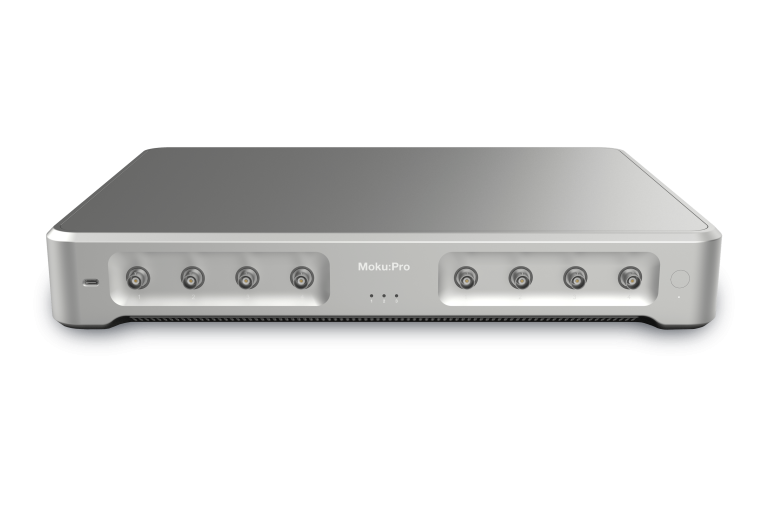
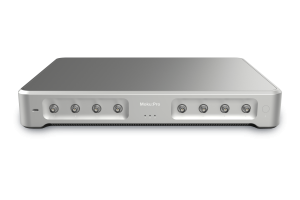
Moku:Pro |
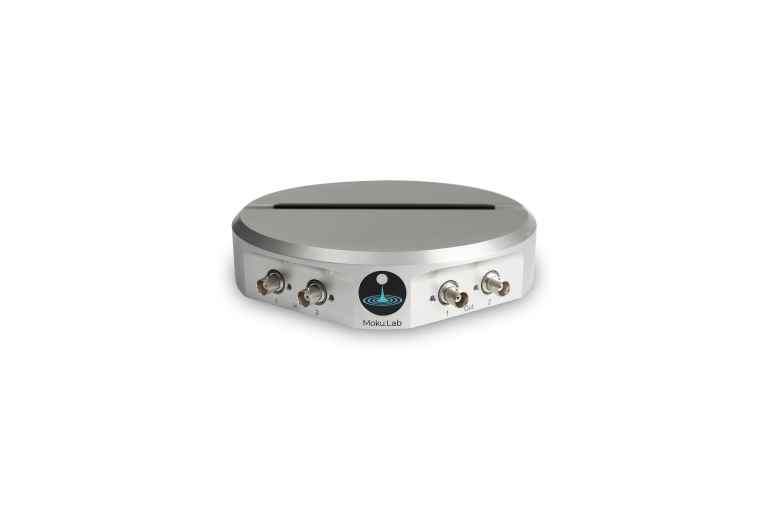
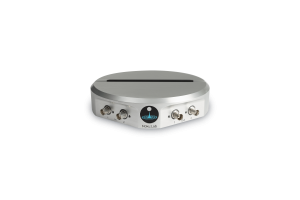
Moku:Lab
|
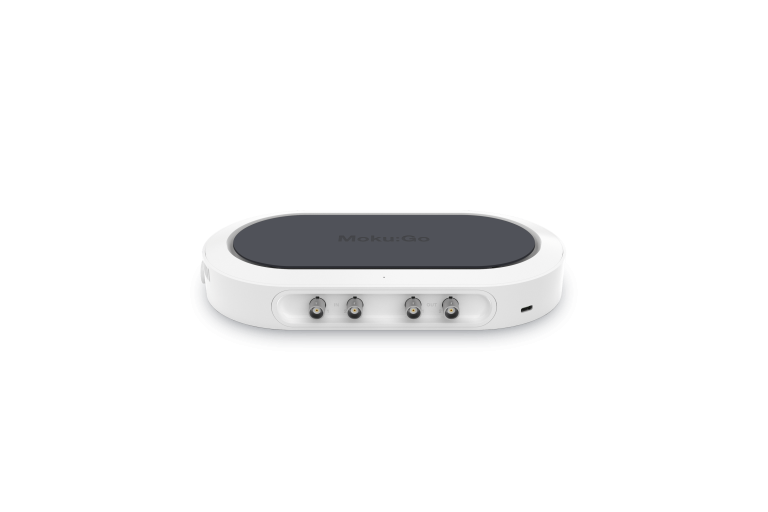
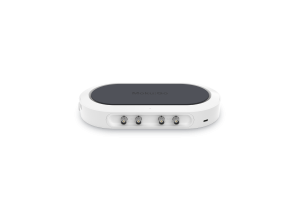
Moku:Go | |||||||||||||||||||||
|---|---|---|---|---|---|---|---|---|---|---|---|---|---|---|---|---|---|---|---|---|---|---|---|---|
| Learn more | Learn more | Learn more | Learn more | |||||||||||||||||||||
Moku:Delta |
Moku:Pro |
Moku:Lab
|
Moku:Go | |||||||||||||||||||||
| Learn more | Learn more | Learn more | Learn more | |||||||||||||||||||||
| TECHNICAL SPECIFICATIONS | ||||||||||||||||||||||||
| Slot configuration | 3-slot5-slot8-slot | 4-slot | 2-slot3-slot | 2-slot3-slot | ||||||||||||||||||||
| Sampling rate | 5 GSa/s1.25 GSa/s625 MSa/s | 1.25 GSa/s | 500 MSa/s250 MSa/s | 125 MSa/s62.5 MSa/s | ||||||||||||||||||||
| Input-to-output latency | < 450 ns | < 650 ns | < 1 μs | N/A | ||||||||||||||||||||
Advanced capabilities, simple operation
With partial FPGA reconfiguration, Multi-Instrument Mode helps you build custom test configurations with low-latency, lossless interconnects to reduce complex cabling and impairments.
Daisy-chain instruments together to build sophisticated digital signal processing pipelines and hot-swap instruments in and out without interrupting those running in tandem.
Accelerate timelines with ultra-fast setup times
Get a sophisticated test system up and running in minutes with our intuitive user interface. All of the instruments are preconfigured to run together on the FPGA, so no complex wiring or coding is required.
Combine with GenInst Studio for ultimate customization
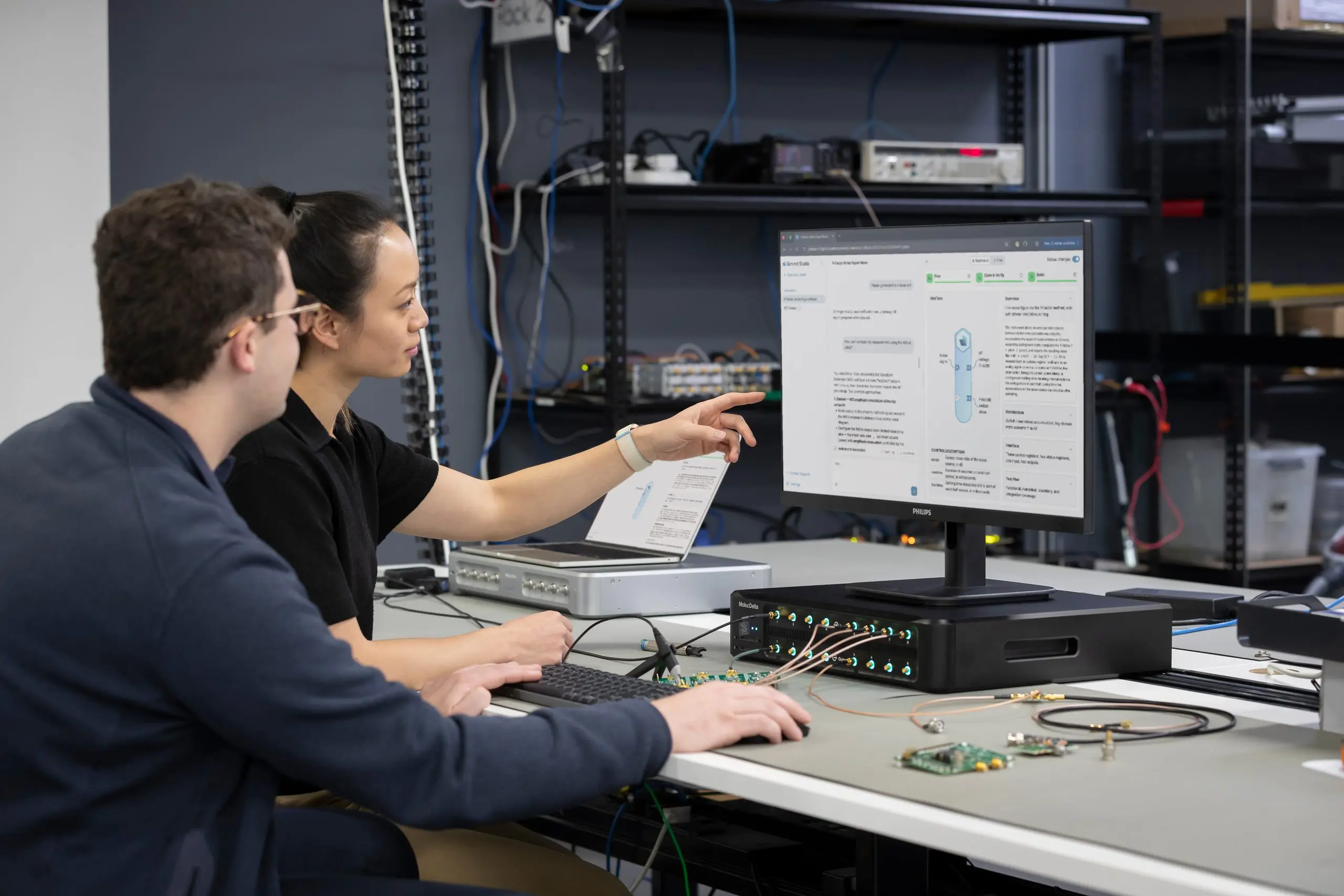
Generate custom test instruments with GenInst Studio. Start with a simple prompt to build personalized control, analysis, generation, or conditioning instruments without any FPGA programming.
FAQ
Multi-Instrument Mode allows you to run up to eight software-defined test instruments simultaneously, with full access to the platform’s analog front end, internal inputs, and back panel triggering. Select the instruments you want to incorporate in your setup directly from the Multi-Instrument Mode interface in MokuOS.
You can deploy up to eight software-defined instruments simultaneously in Multi-Instrument Mode for Moku:Delta, and four for Moku:Pro. For Moku:Lab and Moku:Go, you can deploy three instruments in tandem.
You can configure Multi-Instrument Mode directly on the Moku app for iPad or desktop. Download a free demo of the app here.
With Moku Cloud Compile, you can deploy custom VHDL or Verilog code directly into one of the instrument slots in Multi-Instrument Mode and run their algorithms alongside the built-in instruments for debugging, data sharing, and more.
Featured resources
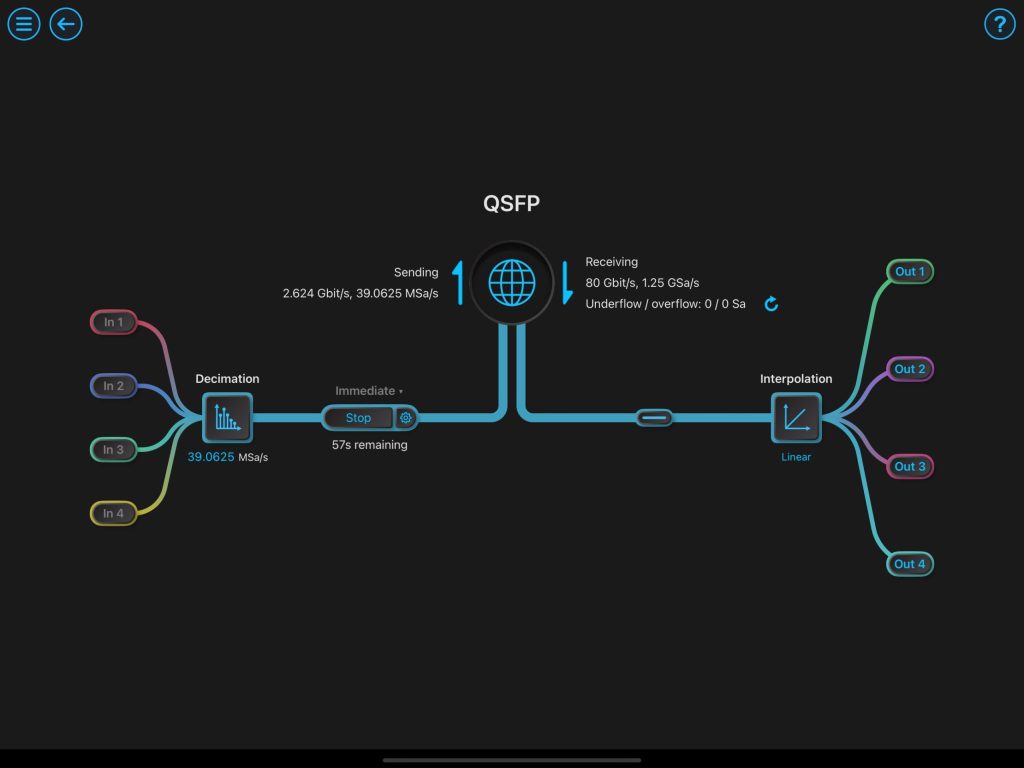
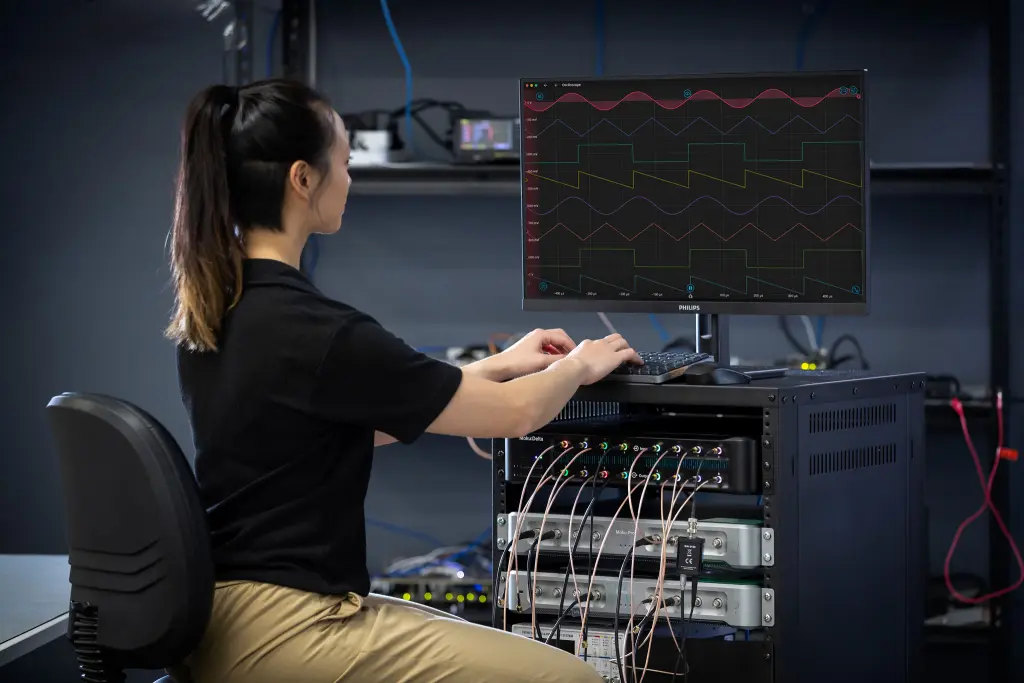
Learn how Moku can help you
Connect with an applications engineer for a personalized demo.