
Please update your browser. For the best Liquid Instruments experience, update to the latest version of Chrome, Edge, Firefox, or Safari. Update Microsoft Edge.
Liquid Instruments Logo
Products
Hardware Platforms
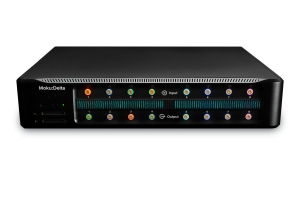
Moku:Delta
Moku:Delta
New
For advanced design and validation
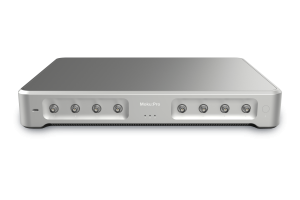
Moku:Pro
Moku:ProFor versatile test and measurement
Moku:Lab
Moku:LabFor experimental research labs
Moku:Go
Moku:GoFor quick testing and debugging
Compare Hardware
Compare HardwareView a side-by-side of all Moku hardware
Technologies
GenInst Studio
New
Generate personalized instruments
Integrated InstrumentsProfessional-grade instruments at your fingertips
Neural NetworkFPGA-powered neural network integration
Multi-Instrument ModeCombine instruments to create a customized test system
Moku CompileCode, compile, and deploy to your Moku's FPGA
Software
MokuOSDownload the Moku app for Windows, macOS, iPadOS & visionOS
APIsPython, MATLAB, LabVIEW
UtilitiesCommand line and graphical tools for file conversion
Instruments
Analysis
Oscilloscope
Spectrum Analyzer
Frequency Response Analyzer
Lock-in Amplifier
Phasemeter
Logic Analyzer / Pattern Generator
Time & Frequency Analyzer
Data Logger
Generation
Waveform Generator
Arbitrary Waveform Generator
Control & Conditioning
PID Controller
Digital Filter Box
FIR Filter Builder
Laser Lock Box
Custom & Utility
GenInst Studio
New
Gigabit Streamer
Custom Instrument
Neural Network
Multi-Instrument Mode
Applications
Optics and Photonics
Microscopy and Spectroscopy
Photon Counting
Quantum Optics
Aerospace and defense
A&D Instrumentation
Component Test
Automated Testing
Semiconductor Test
Control Systems and Bode Analysis
MEMS Testing
AI and Machine Learning
Generative Instrumentation
New
Neural Networks
Education
Education and Research
Resources
App Notes
Blog
Case Studies
Coursework
Guides
Product Documentation
Publications
Webinars
White Papers
Support
Company
Contact Us
About Us
Leadership
Partners
News & Updates
Press
Events Calendar
Careers
Store
Moku:Delta
Moku:Pro
Moku:Go
Upgrade Moku:Pro
Upgrade Moku:Lab
Upgrade Moku:Go
0
Get a quote Buy Now
Build personalized instruments with GenInst Studio in minutes, not months. | Register for the webinar
Blog

New in Moku v3.1.1: Triggered data logging start acquisition

December 6, 2023

    The most requested Moku feature in 2023 was to add the ability to manipulate the Data Logger instrument with a trigger signal. This seemingly simple request has quite a few variants that each solve unique challenges for different applications. With the release of Moku Version 3.1.1 in December 2023, we’ve taken the first step to dramatically improve Moku for data acquisition by enabling triggered start functionality for the Data Logger instrument and other select instruments with an embedded Data Logger (Figure 1). Let’s have a quick look at how this works, and see a sneak preview of what’s coming next.
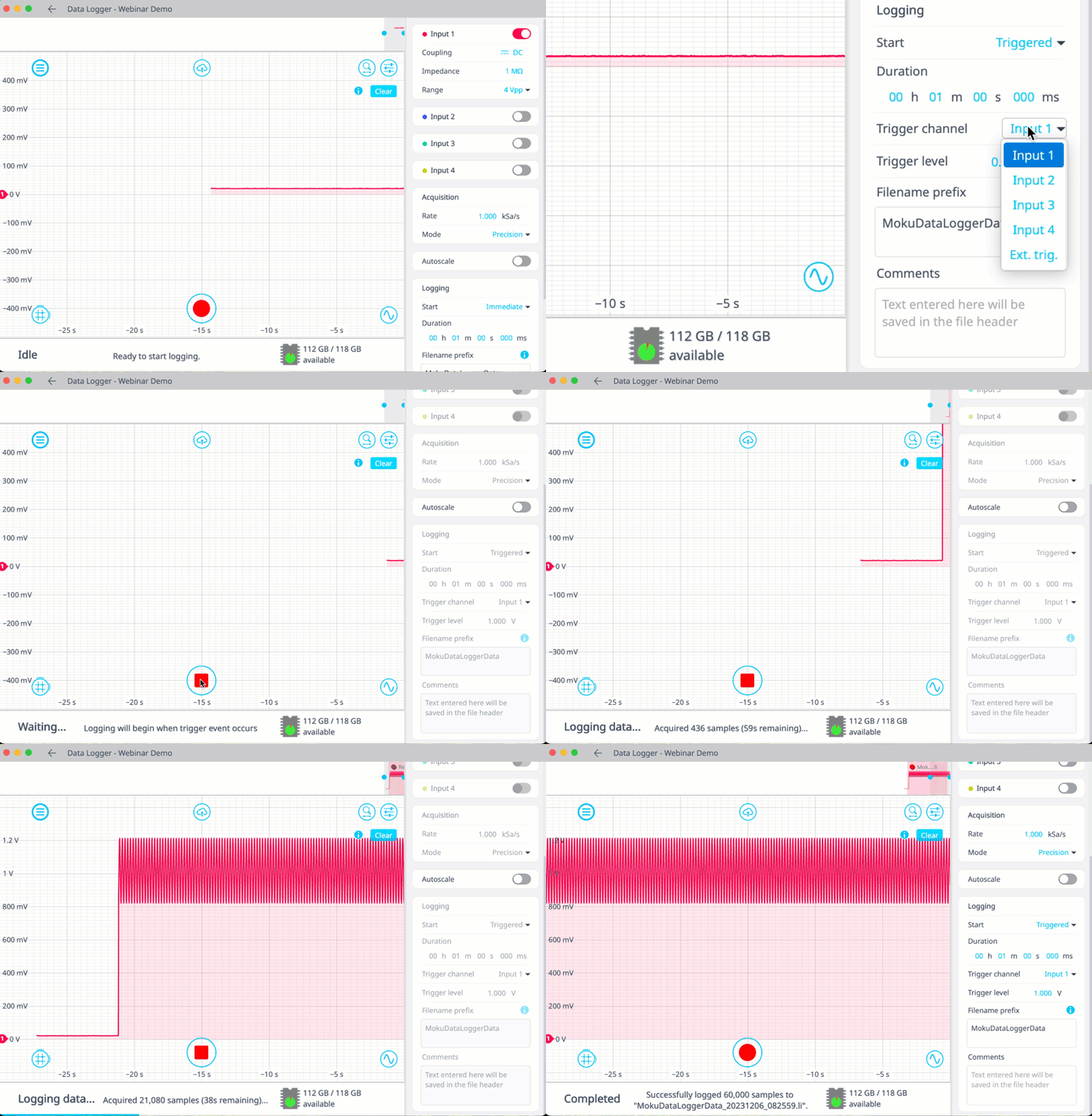
    Moku Data Logger instrument

    Figure 1: With the release of Moku Version 3.1.1, we’ve enabled triggered start functionality for the Data Logger instrument and other select instruments with an embedded Data Logger.

    Triggered start

    The simplest version of triggered data logging is using a rising edge of a signal to begin logging data. Triggered start is useful in two different ways: synchronizing with an external event, and synchronizing multiple Data Loggers within a Moku device.

    In many experiments, data collection begins only after some external condition is met. For example, you might need to wait for your laser to warm up and stabilize before you can use it for a metrology application. Or in microscopy, the stage may need to reset to its home position before you start the raster and begin capturing data. Triggered start makes this waiting period trivial. Now you can just enable the mode, arm the trigger, and walk away. The Moku Data Logger will monitor the trigger signal at up to 5 GSa/s and begin recording data when it detects the trigger event. With Moku Version 3.3, Moku:Pro and Moku:Lab devices can now use the physical “Trigger” port to enable any Data Logger instrument with an external source.

    Logging across multiple instruments

    One of the most powerful features offered by the highly flexible Moku test platform is Multi-instrument Mode. In Multi-instrument Mode, Moku runs several parts of your experiment with different instruments operating simultaneously. Until release 3.1.1, it could be difficult to synchronize data generation and collection across multiple instruments in Multi-instrument Mode. But with triggered start, for example, you can now start a Waveform Generator and Data Logger at the same time, collecting results only while driving your experiment. When building a custom test system, you can also now start the embedded Data Loggers within certain instruments all at the same time, guaranteeing simultaneous sampling throughout every point in your experiment.

    What’s next?

    Triggered start adds a lot of capability for instrument synchronization both inside and outside Moku. Now that the building blocks are in place, we will continue to add more triggering functionality to our Data Logger and other instruments that support data acquisition. For example, what if your data is only valid for some time, so you have to both start and stop your acquisition on a trigger? If you’ve gated your acquisition so it’s not running continuously, then each acquisition can run at a higher sampling rate without overflowing the internal buffers. Finally, if you’re able to acquire for shorter lengths and higher sample rates with a trigger, then how about capturing a short burst like this manually?

    We have a host of exciting features coming down the pipeline, with triggered start available now for all Moku users with a simple software update. For us, the most exciting thing about this update is that it is being driven directly by customer feedback. Have you tried triggered start? Which data acquisition feature should we implement next? Let us know on our User Forum or by emailing support@liquidinstruments.com.

    Try Moku in demo mode Download the Moku app → Get answers to FAQs Visit Knowledge Base → Connect with Moku users Join the user forum →

    Other Recommended Blog Posts

    Blog
    What is Generative Instrumentation?

    The AI-enabled technology for creating customized test solutions, including specialized measurements, real-time signal processing, and control capabilities

    Date: July 14, 2026

    Blog
    5 Advantages of FPGA-Based Customization for Test & Measurement

    How instruments with user-programmable FPGAs are replacing racks of test equipment, and what that means for your lab.

    Featuring: Moku Cloud Compile

    Date: May 22, 2026

    Blog
    Faster, more powerful real-time customization with MokuOS 4.2

    MokuOS 4.2 unlocks higher bandwidth, faster real-time processing, and more instruments on Moku:Delta, all with a simple software update.

    Date: March 19, 2026

    Back to all Blog

    Nav

    • Products
    • Instruments
    • Resources
    • Support
    • Company
    • Contact Us
    • Privacy Policy
    • Terms of Use

    Offices

    United States
    (619) 332-6230
    12526 High Bluff Dr.
    Suite 150
    San Diego, CA 92130

    Australia
    +61 2 6171 9730
    243 Northbourne Avenue
    Suite 1, Level 1
    Lyneham, ACT 2602

    Australia
    +61 3 7073 3594
    Suite 5C, Level 5,
    700 Swanston Street,
    Carlton, VIC – 3058


    Follow us

    LinkedIn YouTube X Facebook Instagram

    官方微信

    © 2026 Liquid Instruments. All rights reserved.