

This Case Study was written by Xilinx and originally appeared on their website under Powered by Xilinx

At a glance:
Liquid Instruments was founded by a team of experimental physicists and engineers with expertise in precision measurement and gravitational wave detector instrumentation. The company provides technology that helps scientists, engineers, students, and professionals seamlessly acquire data, run measurements, and control their experiments.
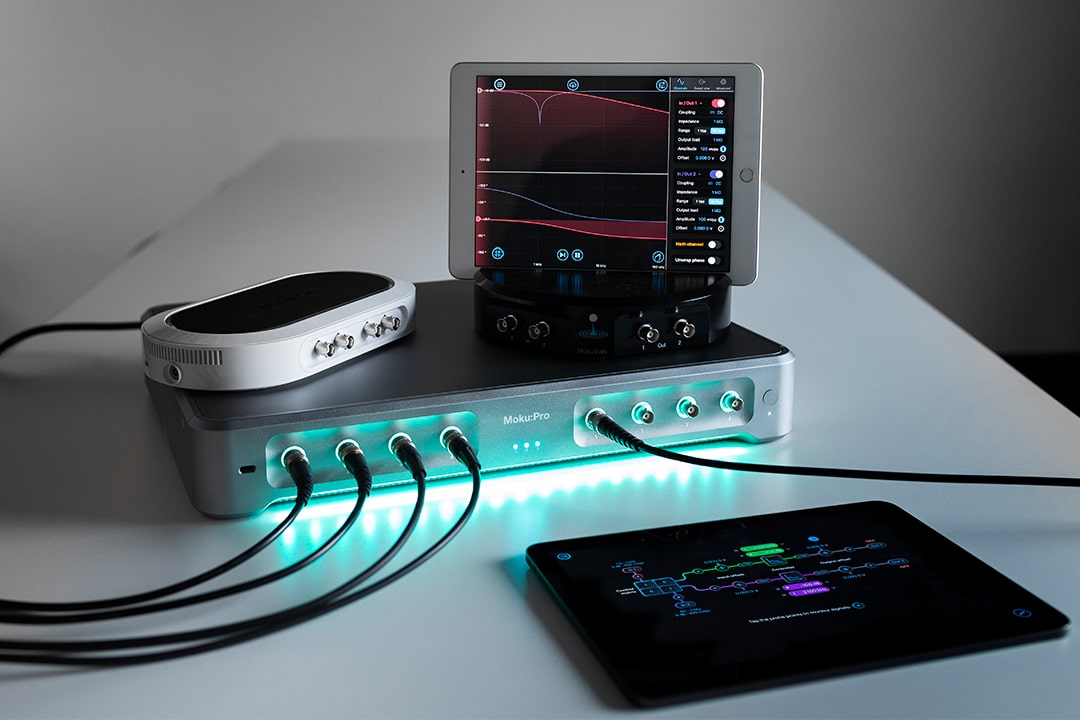
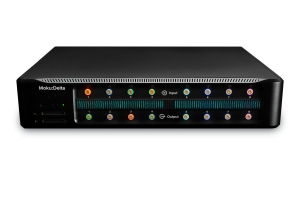
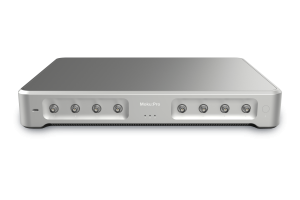
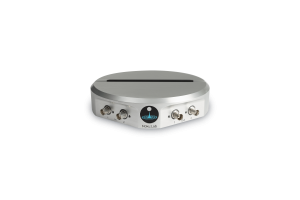
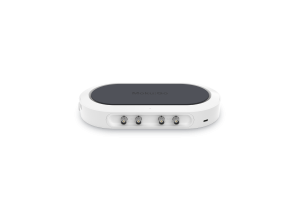
Figure 1: Liquid Instruments’ Moku family gives researchers multiple scientific instruments in a single platform
Summary:
Liquid Instruments is building a suite of software-defined scientific instrumentation with feature sets to address three different market segments: education, mid-level research, and high-end research. Its Moku family of products offers multiple analytical tools in a single platform, along with software that allows users to quickly change product functionality.
Using programmable logic on the Zynq platform, users can dynamically reconfigure the device into any of more than a dozen precision instruments, including an oscilloscope, waveform generator, frequency response analyzer, PID controller, data logger, arbitrary waveform generator, spectrum analyzer, lock-in amplifier, phasemeter, laser lock box, digital filter box, and FIR filter builder.
Challenge:
Scientific instrumentation is expensive. Researchers who want to take measurements on 13 different parameters in their lab need 13 different tools. And, as a growing number of researchers, engineers, and students find themselves collaborating remotely, the costs to equip each person with the necessary tools to do their job can quickly add up.
Liquid Instruments recognized this challenge and decided to develop a solution that would integrate multiple tools into one using software-defined hardware, helping to change the way test and measurement is done.
Solution:
The solution is the Moku family of scientific instruments. Leveraging Xilinx’s Zynq platform, users can dynamically reprogram the tool to serve as any one of more than a dozen predefined test and measurement tools.
Liquid Instruments built its first two products, Moku:Go and Moku:Lab, with Xilinx’s Zynq 7 series FPGA, and recently shifted its newest product, Moku:Pro, to the Zynq UltraScale+ MPSoC platform.
“We chose Xilinx because of its performance and flexibility, along with the highly integrated nature of its Arm architecture,” said Doug Phillips, vice president of marketing at Liquid Instruments. “This combination allows us to take software-defined instrumentation and maximize it at a platform level to address different market segments.”
“Xilinx is much more mature and has greater critical mass in terms of support tools and community,” added chief software architect, Ben Coughlan. “The Xilinx team has been very helpful to us as we’ve traversed many difficult design challenges to create a great solution for our customers.”
Moku products target physicists, the research community, and undergraduate education. Each member of the Moku family offers a predefined set of instruments and easy-to-use software that allows users to quickly change the functionality of the device.
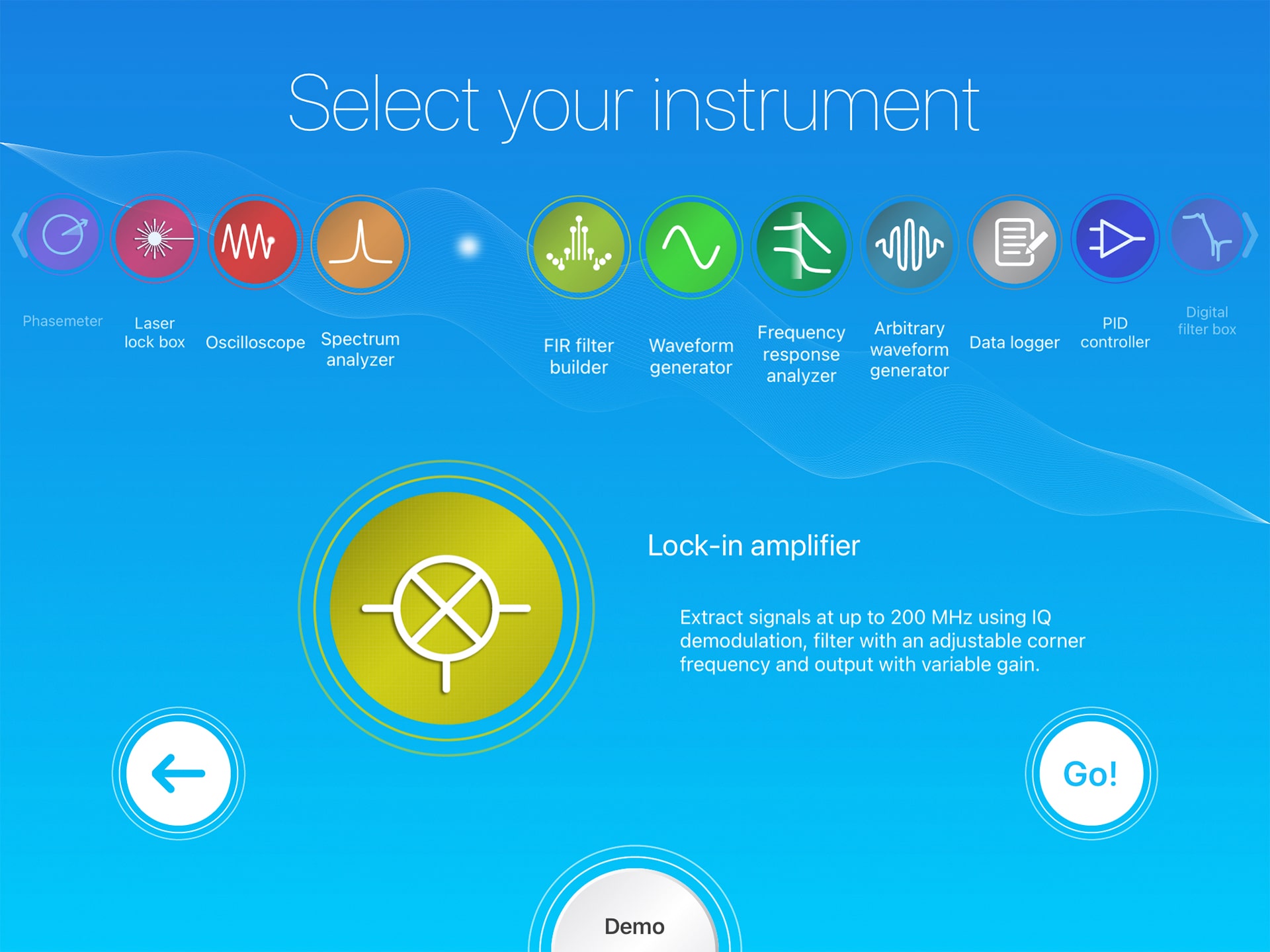
Figure 2: Moku’s intuitive software interface allows users to easily configure the device to the instrument they need.
With the Zynq UltraScale+ MPSoC on board, Moku:Pro can receive over-the-air updates to deliver improved specs, new instruments, or entirely new capabilities. Liquid Instruments will soon release a feature that gives Moku:Pro the ability to run multiple instruments in conjunction with one another, and hot-swap instruments in and out. The company is also planning to release a new cloud-based tool that will allow users to directly program the FPGA so they can implement unique signal processing algorithms and create their own custom instruments.
Zynq UltraScale+™ devices provide 64-bit processor scalability while combining real-time control with soft and hard engines for graphics, video, waveform, and packet processing. Its hardware acceleration capabilities offer more than enough processing power for the integration of many features, including Dynamic Function Exchange (DFx), which allows users to instantly reconfigure the FPGA to perform a different task.
“DFx wasn’t even on our radar when we started designing Moku:Lab, but it was a happy coincidence that definitely became a factor in our decision to move to the Zynq UltraScale+ family going forward,” Coughlan said.
Result:
Today, Liquid Instruments competes with several companies that offer fixed-function devices, but Phillips said no others offer the same levels of integration or performance.
“Customers are building state-of-the-art research with our tools, and most are delighted and surprised by how much our products can do,” he said. “There are no limitations on how many different tools we could put on the platform. We are only limited by the market and the idea.”
Coughlan added, “We have been very satisfied working with Xilinx. We’ve pushed the Zynq beyond what we thought we would, and we’re pushing UltraScale+ pretty hard, too, in terms of system design. Both products are continuing to exceed our expectations.”
Additional Resources:
Learn More about Xilinx’s Zynq UltraScale+ MPSoC
Have questions or want a printable version?
Please contact us at support@liquidinstruments.com